
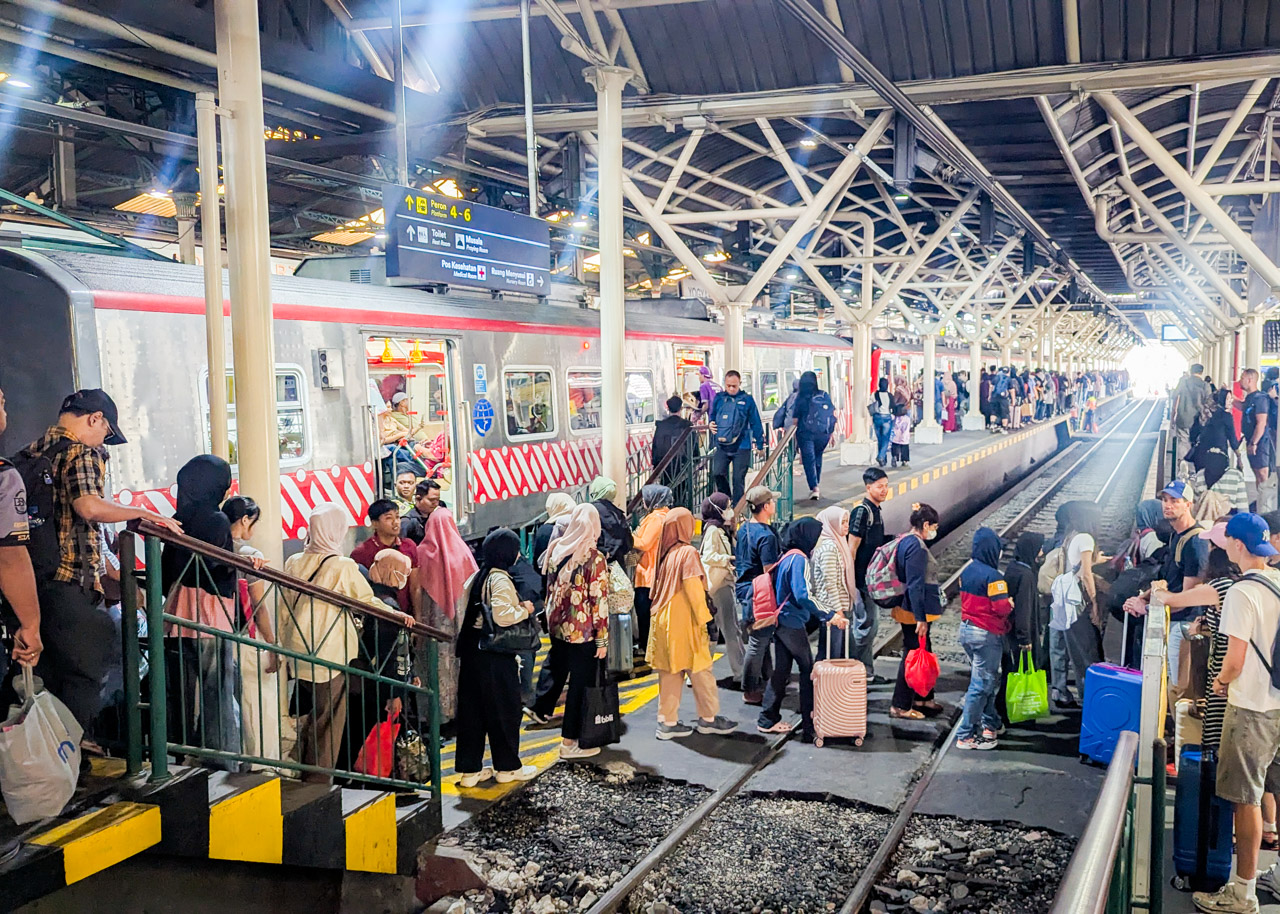
Yogyakarta and Bandung are visited by a large percentage of Indonesia’s tourists, and most of them travel between the two cities on the train. It’s easily the most efficient way to cover the 400km and passes through some of the most attractive parts of the country.
Seven trains run daily and although some of them travel overnight, the most popular services are those that operate during the day to take advantage of the stunning scenery en route.
Disclaimer: This website contains affiliate links. Should you click to purchase, it is at no additional cost to you, but we receive a small commission.
Have questions? Join the Southeast Asia Trains Facebook Group.
Route map and details
After departing the charming city of Yogyakarta, trains to Bandung head west into Central Java’s countryside, its photogenic volcanoes and mountains ever-present on the horizon. Starting 100m above sea level, the route gradually drops and then climbs to almost 800m through mountain passes, remote villages and agricultural valleys. If your budget allows, the Argo Willis train has a Panoramic carriage, perfectly designed to make the most of the scenery.
Timetables
Click here to check all Indonesia train times
There are seven trains per day from Yogyakarta to Bandung:
| Train | Yogyakarta | Bandung |
|---|---|---|
| Lodaya | 08:12 | 15:27 |
| Malabar | 11:31 | 18:05 |
| Argo Wilis | 12:13 | 18:17 |
| Lodaya | 20:01 | 03:14 |
| Mutiara Selatan | 22:16 | 05:15 |
| Malabar | 22:41 | 05:45 |
| Turangga | 23:50 | 06:10 |
Average journey time: 6 hours 45 minutes
How to buy tickets
Click here to book train tickets from Yogyakarta to Bandung.
The easiest way to buy train tickets in Indonesia is online rather than going to the station. You do pay a very small commission but the ease and convenience makes it worthwhile.
12Go is the best website to use and accepts international credit cards. It's also a good place to check timetables and prices.
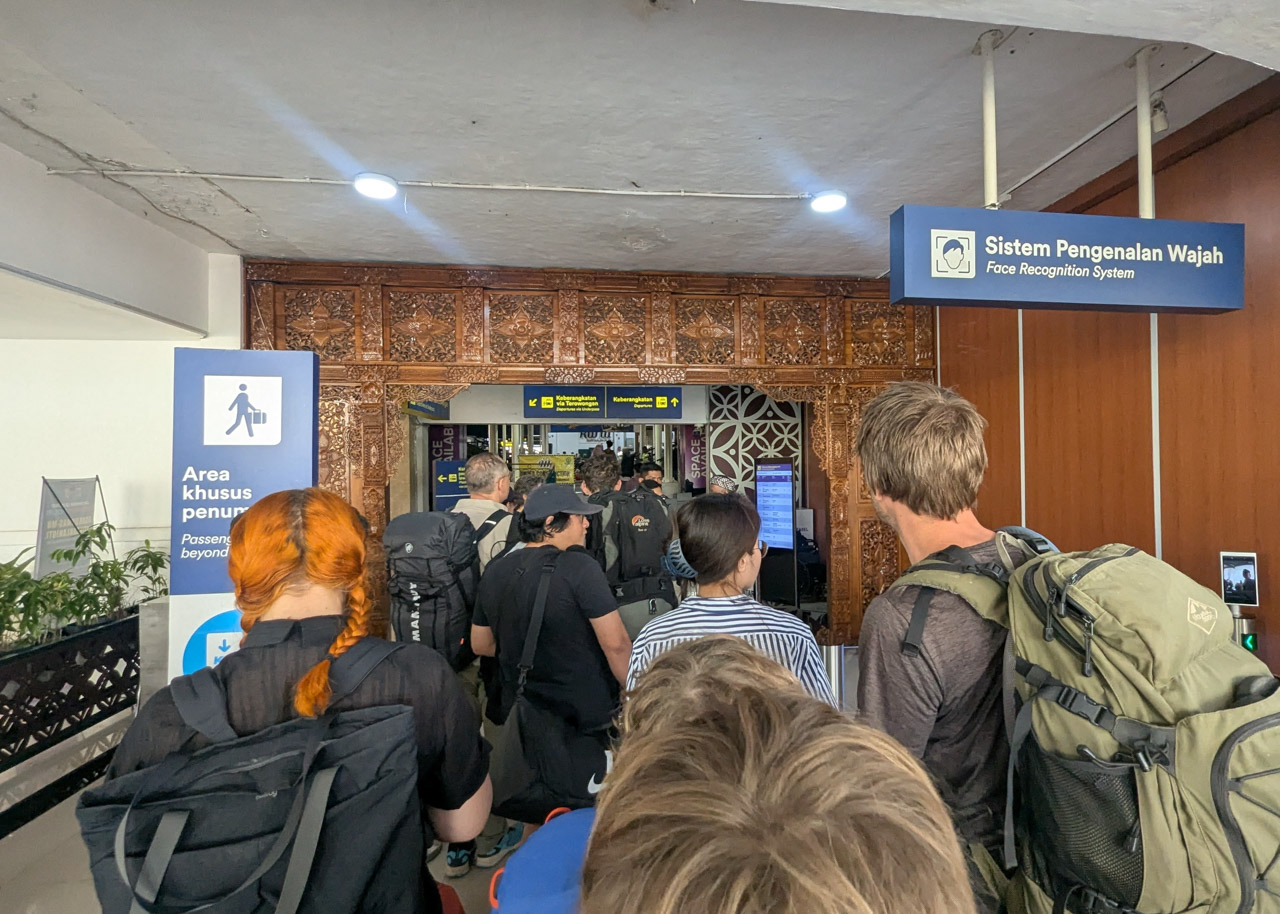
After booking online you'll receive a confirmation email with a QR code and booking number. You'll need to exchange this for an orange boarding pass via one of the self-service machines at the station before travel. This can be done up to seven days in advance at any station in the country (it doesn't need to be the one you're departing from). You may also need to show your passport or ID at the boarding gate, but this isn't usually enforced.
How much does it cost?
Several different types of train operate on the route from Yogyakarta to Bandung, including one of the country’s best trains, Argo Wilis, which includes a panoramic carriage, plus complimentary meals and refreshments.
On the Argo Wilis train, the most expensive option is in the Panoramic carriages, costing from IDR950,000 (US$60). As you drop down the various classes on this and other trains (Luxury, Executive, Economy), tickets can be bought for as little as IDR290,000 (US$18).
What to expect on board
Although the Panoramic carriages offer the best views, the majority of passengers travel in one of the two cheaper classes, Executive or Economy. The trains usually have three carriages for each of these classes and they’re often fully-booked during peak season. Try to book as far in advance as possible, especially if you’re travelling in a group.
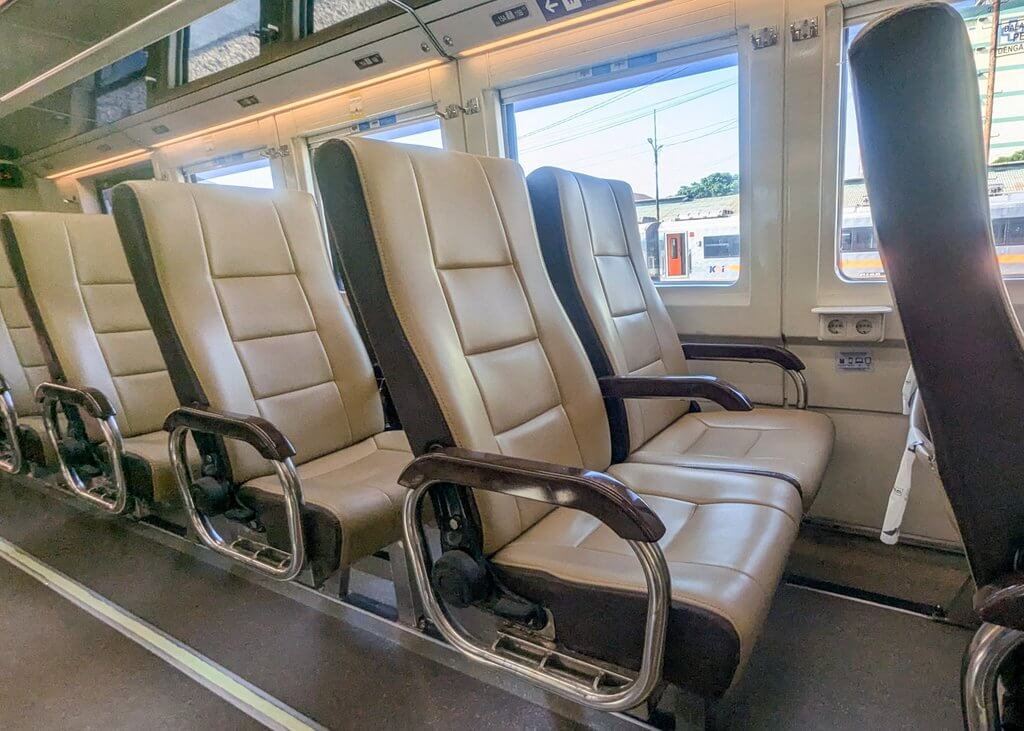
It can be difficult to know which class to choose but for journeys over three hours, it makes sense to upgrade to Executive class. Not only does it give you more legroom and comfort, you’ll be guaranteed a forward-facing seat. Economy class is still a popular choice and many tourists enjoy the ride, but it’s definitely less comfortable and legroom is limited, especially if you’re over 6ft tall.
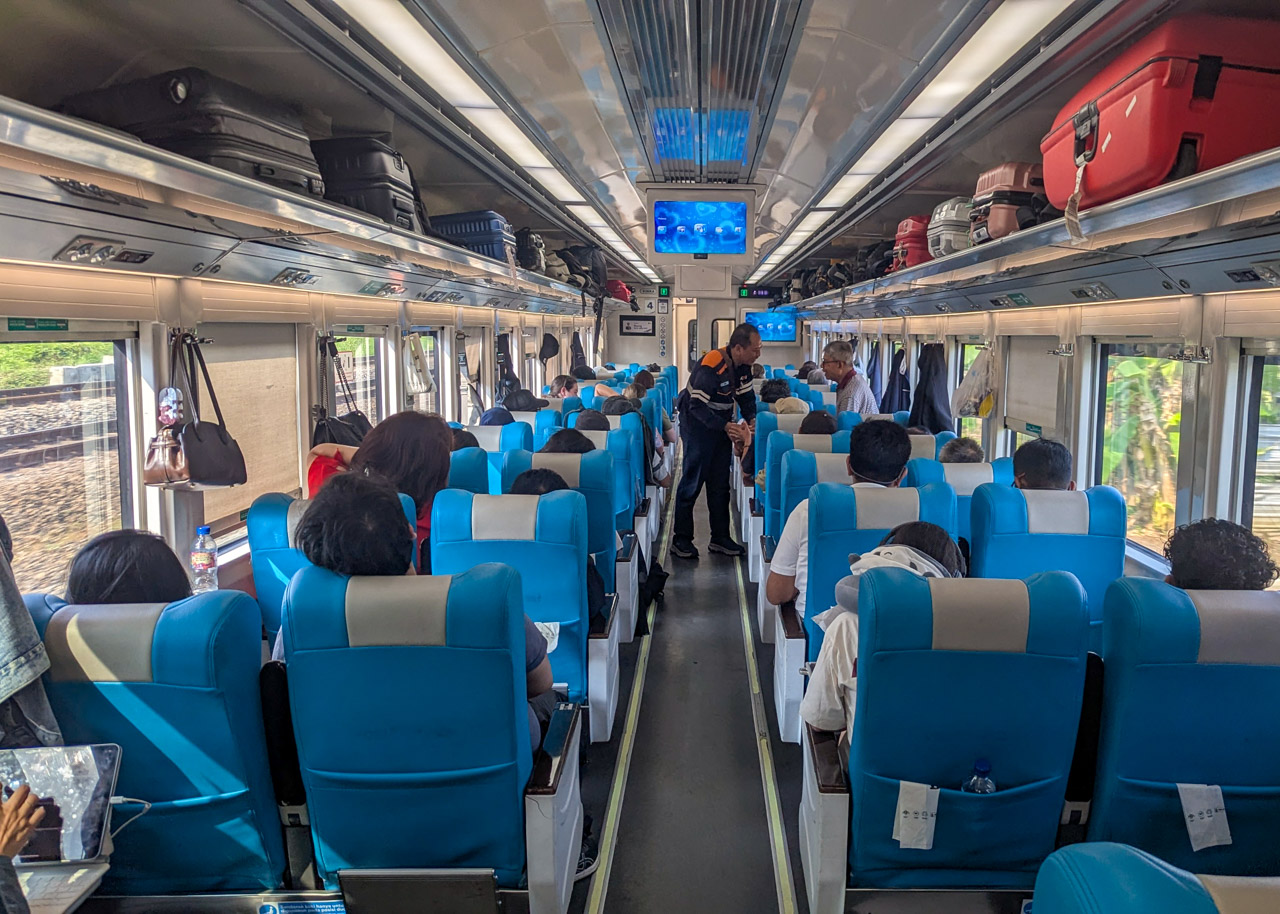
Executive class is always the most popular choice with overseas visitors and you’ll find fewer domestic travellers in these carriages. It can sometimes feel like you’re part of a tour group rather than experiencing local life, but it’s a stress-free way to travel. If you’re here during peak tourist season (particularly during European summer holidays), the majority of the passengers will be westerners.
Seats can be rotated to face the direction of travel and provide a significant amount of legroom, so you can really stretch out fully with no restrictions. This means that seats can be fully reclined without impacting the people sat behind you. When you combine this with the large windows, footrests and padded seats, it’s a recipe for a relaxing and enjoyable journey.
Economy class is a slight step down from Executive and this is reflected in the lower price. It’s often the case in peak season that Economy is the only available option but that shouldn’t put you off booking. Although the carriages feel much less premium and are more crowded, it’s still a perfectly comfortable way to travel.
The biggest downside are the extra rows of seats that have been added to these carriages, that significantly reduce the amount of legroom. If you’re over 6ft tall, it can be quite a squeeze. Also, unlike in Executive, Economy seats are fixed in place and cannot be rotated, so half of them face the direction of travel and half face backwards. Not everyone minds this but if you’re prone to motion-sickness, keep it in mind. On our trip, rows 11-20 were forward-facing, but this can vary.
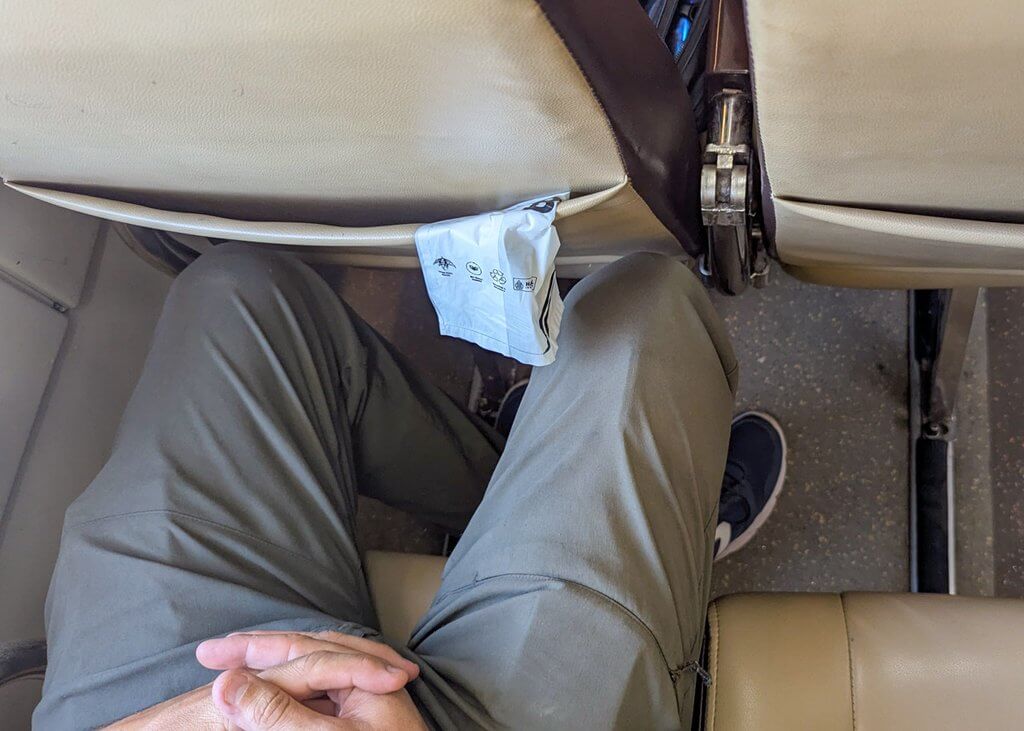
Note that rows 10 and 11 are the centre of the carriage, so these pairs of seats face each other. It’s a good thing if you’re travelling in a group of four but less so otherwise as you’ll be directly opposite strangers for the whole journey with very little privacy or legroom.
Both types of carriages are fully air-conditioned and have power points, armrests and tray tables.
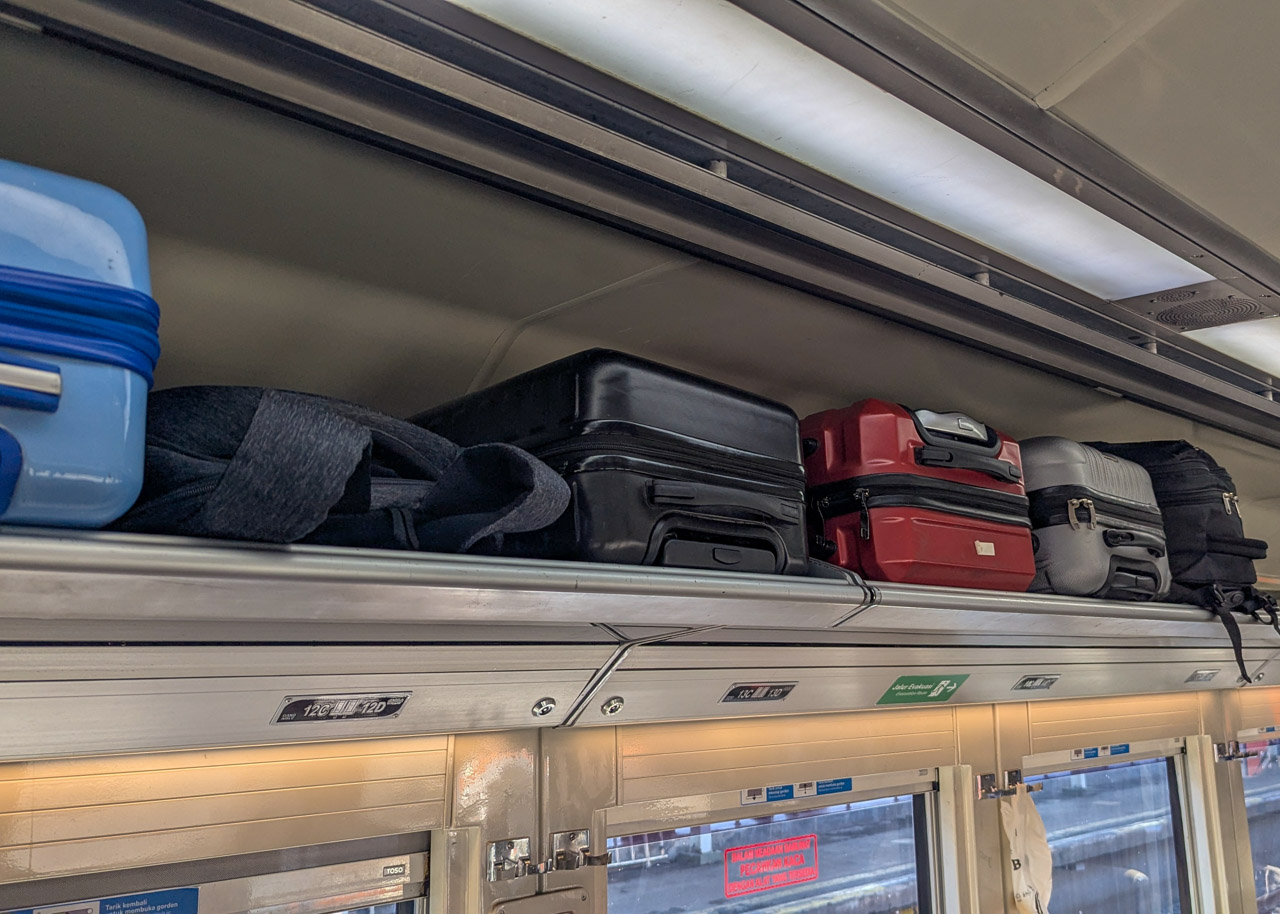
Luggage storage is the same in both classes. In theory there’s plenty of space for luggage but many tourists bring gigantic suitcases onto the train that don’t fit into the overhead luggage racks. So there can be quite a battle to squeeze these large cases into the luggage racks at the end of the carriage. You’ll find life much easier if you bring backpacks or smaller, soft suitcases that easily fit in the overhead luggage racks.
Technically, each passenger is allowed 20kg, and this is often enforced if you’re obviously exceeding the limits.
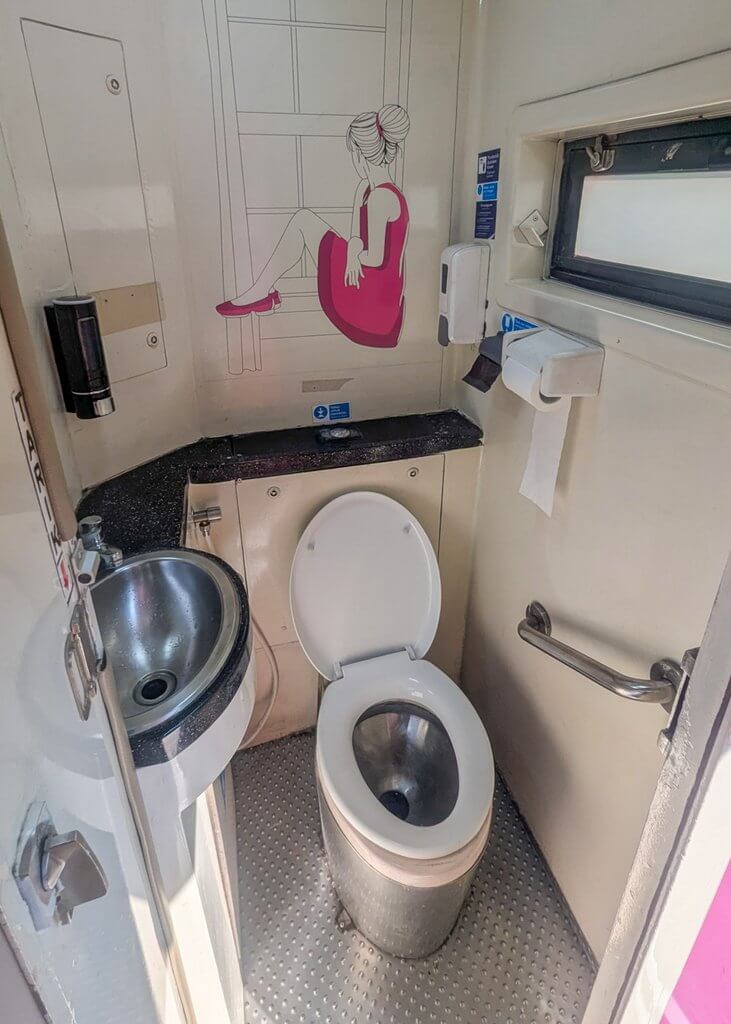
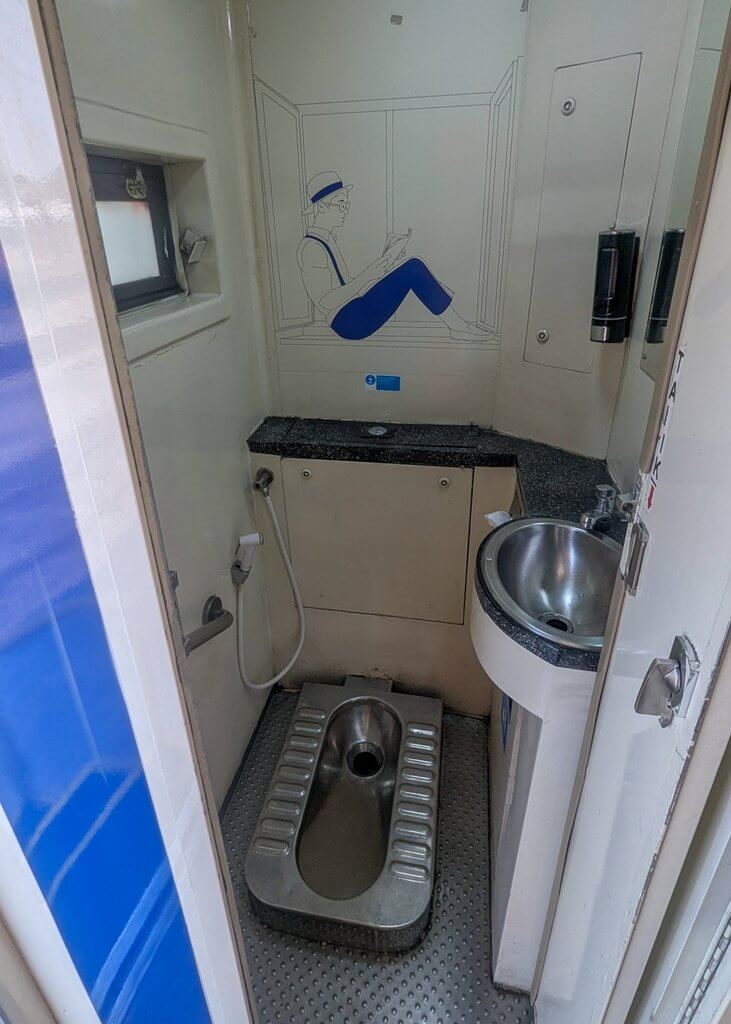
Toilets are located at the end of each carriage, with either Western-style or ‘squat-and-drop’, depending on the train and class you’re travelling in. Economy tends to have both types, Executive is usually Western-style only, and has separate male and female toilets. If they notice you patiently queueing for your gender’s toilet and the other one is available, train guards often suggest you just use the other toilet rather than waiting. Both classes’ toilets are cleaned regularly and kept in decent condition.
Catering options
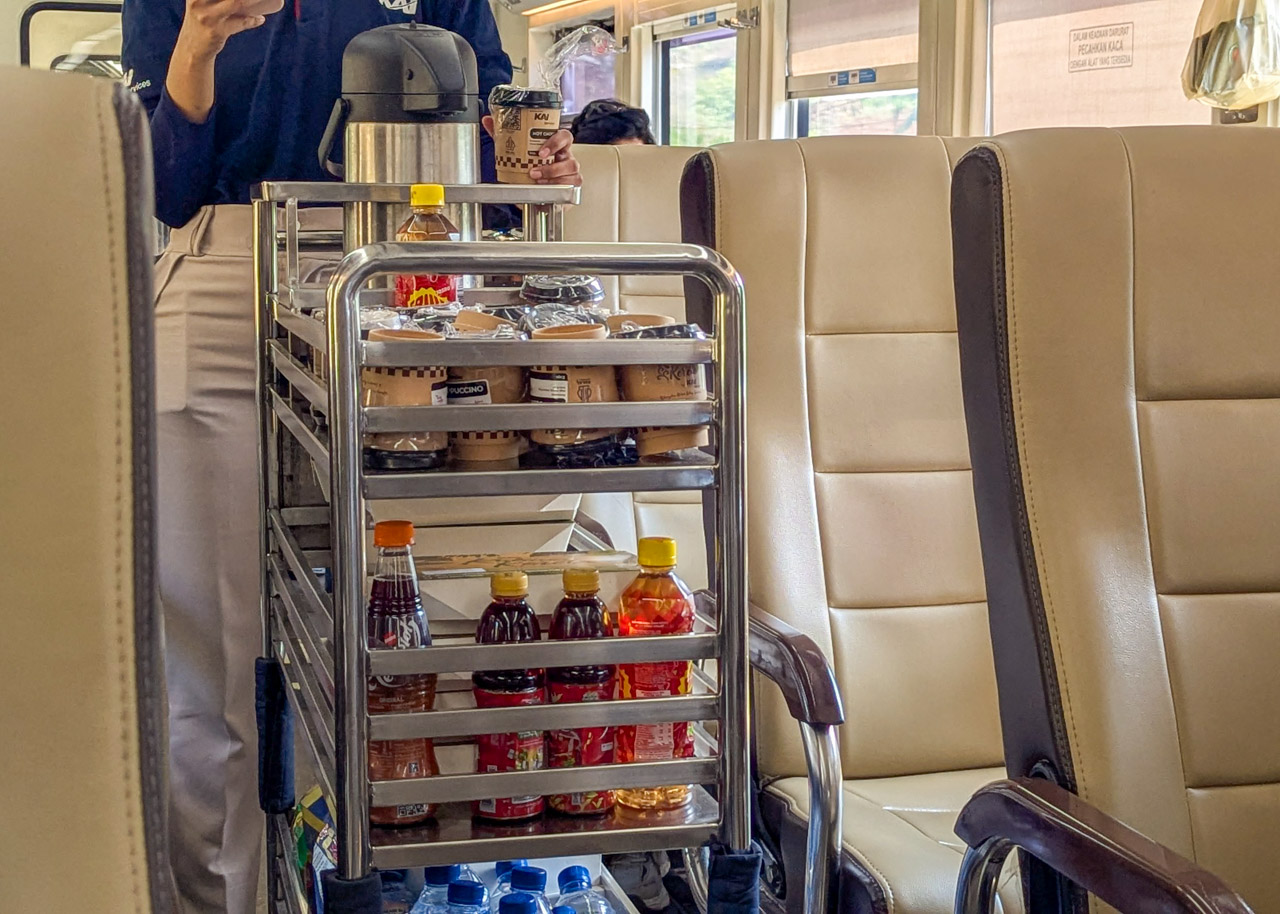
A well-stocked catering trolley is pushed down the aisle every thirty minutes or so, selling hot meals (noodles, rice, etc), snacks, instant noodles, coffee and soft drinks. Payment is by cash or e-wallets (QRIS).
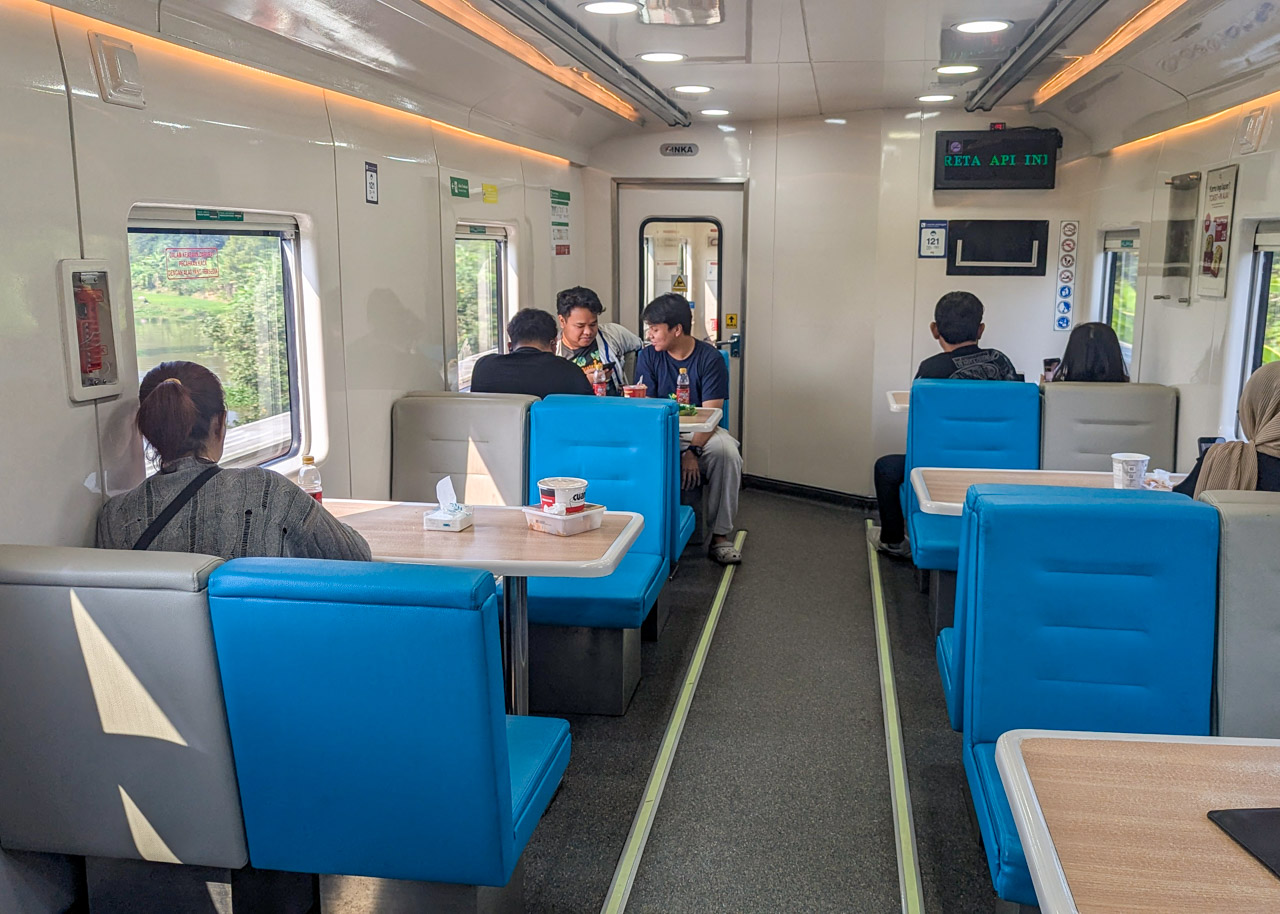
If you’d prefer to eat at a proper table, you can also walk down to the restaurant car. This has seating for around twenty people in groups of four, and is a pleasant place to enjoy food and drink. It’s basically the same choice offered by the trolley but do be warned that stock is limited and, after the first three hours of the trip, choices become limited.
Unlike in some other Southeast Asian countries, food vendors don’t come onto the train at station stops.
Journey description
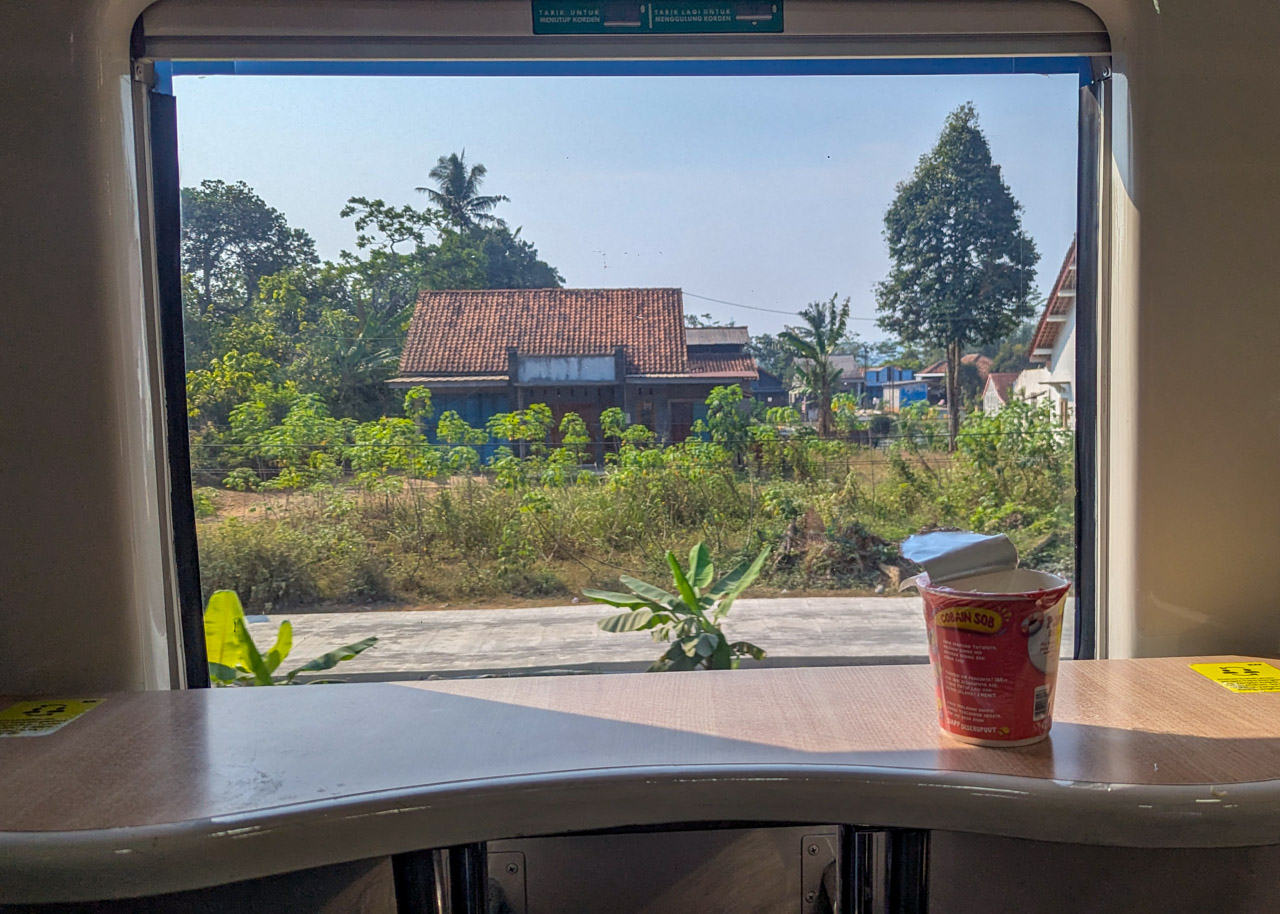
Many travellers rate this journey from Central to West Java as one of the best in Southeast Asia and it’s easy to see why. The scenery after leaving Yogyakarta and entering the valley is stunning, always framed by the volcanoes that define the geology and geography of the region.
Starting at 100m above sea level, the train drops down near the port city of Cilacap before gradually climbing for the rest of the route, eventually reaching 800m above sea level in Bandung. Our favourite section of the route is near the small town of Leles, where the train squeezes through narrow mountain passes and across rivers, before performing a unique horseshoe-shaped turn.
Bandung is a key tourist destination in West Java and its station is ideally placed in the centre of town. After leaving the train, there’s no need to re-scan your QR code to exit, just walk through the gates and you’re set to go. From the station, it’s usually easiest to take a Grab or Gojek taxi to your hotel before exploring the rest of this beautiful region.
Useful reads before you go:
Top tips for Southeast Asia train travel
Reasons why you should travel by train around Southeast Asia
The BEST train journeys in Southeast Asia
10 essentials experienced travellers always take on trains in Southeast Asia
Book your train travel:
If you have found this website useful for planning your Southeast Asia train travel, you can show your support by buying me a coffee. Thanks so much!
