

Bandung and Yogyakarta are two of Indonesia’s most visited and interesting cities. While some of the seven daily trains run overnight, most travellers opt for the Argo Wilis or Malabar daytime services, allowing them to enjoy the panoramic scenery and arrive in Yogyakarta refreshed and ready to explore.
Disclaimer: This website contains affiliate links. Should you click to purchase, it is at no additional cost to you, but we receive a small commission.

Route map and details
Trains from Bandung to Yogyakarta travel eastward, winding through rural landscapes, small towns, and stretches of rice fields. If you can, reserving a seat in one of the Panoramic carriages on the Argo Willis train is well worth the extra expense, allowing you to fully appreciate the views along the way.
The journey ends at Yogyakarta’s main station, right in the heart of the city and close to its most famous tourist street, Jalan Malioboro.
Timetables
Click here to check all Indonesia train times
There are seven trains per day from Bandung to Yogyakarta:
| Train | Bandung | Yogyakarta |
|---|---|---|
| Lodaya | 06:30 | 13:16 |
| Argo Wilis | 07:35 | 13:24 |
| Malabar | 09:30 | 16:30 |
| Turangga | 17:40 | 23:42 |
| Malabar | 18:10 | 00:51 |
| Lodaya | 19:00 | 01:49 |
| Mutiara Selatan | 20:00 | 02:35 |
Average journey time: 6 hours 35 minutes
How to buy tickets
Click here to book train tickets from Bandung to Yogyakarta.
The easiest way to buy train tickets in Indonesia is online rather than going to the station. You do pay a very small commission but the ease and convenience makes it worthwhile.
12Go is the best website to use and accepts international credit cards. It's also a good place to check timetables and prices.
After booking online you'll receive a confirmation email with a QR code and booking number. You'll need to exchange this for an orange boarding pass via one of the self-service machines at the station before travel. This can be done up to seven days in advance at any station in the country (it doesn't need to be the one you're departing from). You may also need to show your passport or ID at the boarding gate, but this isn't usually enforced.

How much does it cost?
Several different types of train operate on the route from Bandung to Yogyakarta, including one of the country’s best trains, Argo Wilis, which includes a panoramic carriage, plus complimentary meals and refreshments.
On the Argo Wilis train, the most expensive option is in the Panoramic carriages, costing from IDR950,000 (US$60). As you drop down the various classes on this and other trains (Luxury, Executive, Economy), tickets can be bought for as little as IDR290,000 (US$18).
What to expect on board
The majority of passengers on this route travel in one of two classes, Executive or Economy. All services from Bandung to Yogyakarta offer these classes and they’re the best value for money. If you fancy treating yourself to some luxury, a couple of trains also offer compartments and panoramic carriages.
In general, for journeys over three hours, it makes sense to upgrade to Executive class, as it offers more legroom and comfort, plus you’ll always have a forward-facing seat. Economy class is still perfectly adequate for this journey and it can be significantly cheaper. You just need to be prepared for a slightly less comfortable trip, especially if you’re over 6ft tall and value decent legroom.
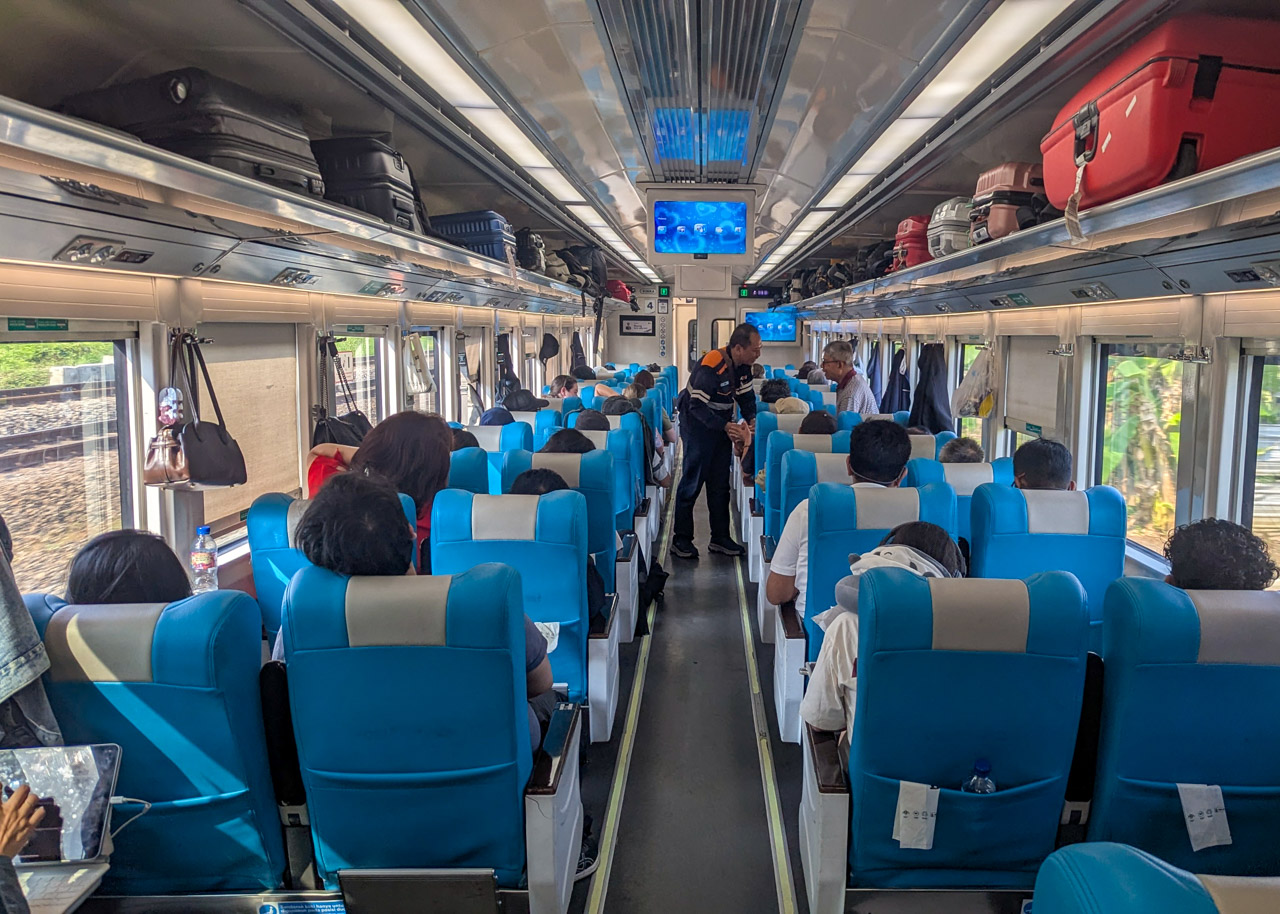
Executive class is the one most-favoured by overseas visitors and if you’re here during peak tourist season, the majority of the carriage will be filled with tourists. Seats can be rotated to face the direction of travel and come with a huge amount of legroom that allows even the tallest passenger to stretch out. You can also feel free to fully recline the seats, knowing that it won’t impact the people behind you. Coupled with the large windows and padded seats, it all adds up to a very comfortable journey.
Economy class is popular with domestic travellers and feels more crowded and busy than Executive. These carriages have several additional rows of seats that greatly reduce legroom, and they’re also slightly shabbier compared to Executive (even Premium Economy), so it’s not quite as pleasant a trip. Unlike in Executive, Economy seats cannot be rotated, so you might find yourself travelling backwards for the entire journey. On our trip, rows 1-10 were forward-facing, but this can vary.
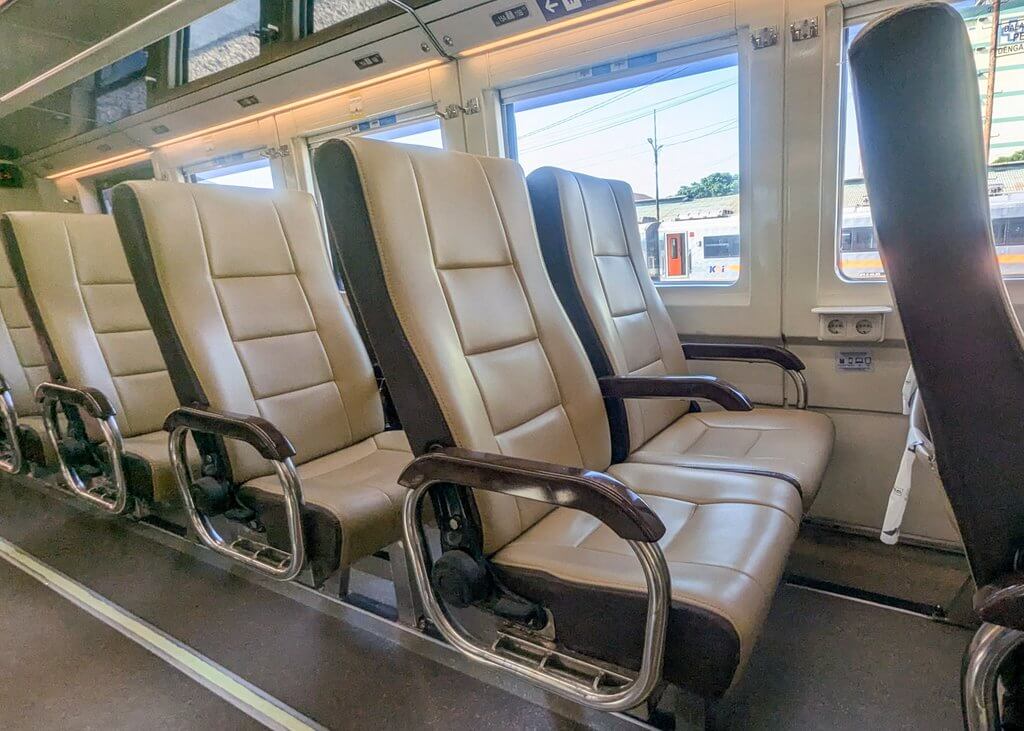
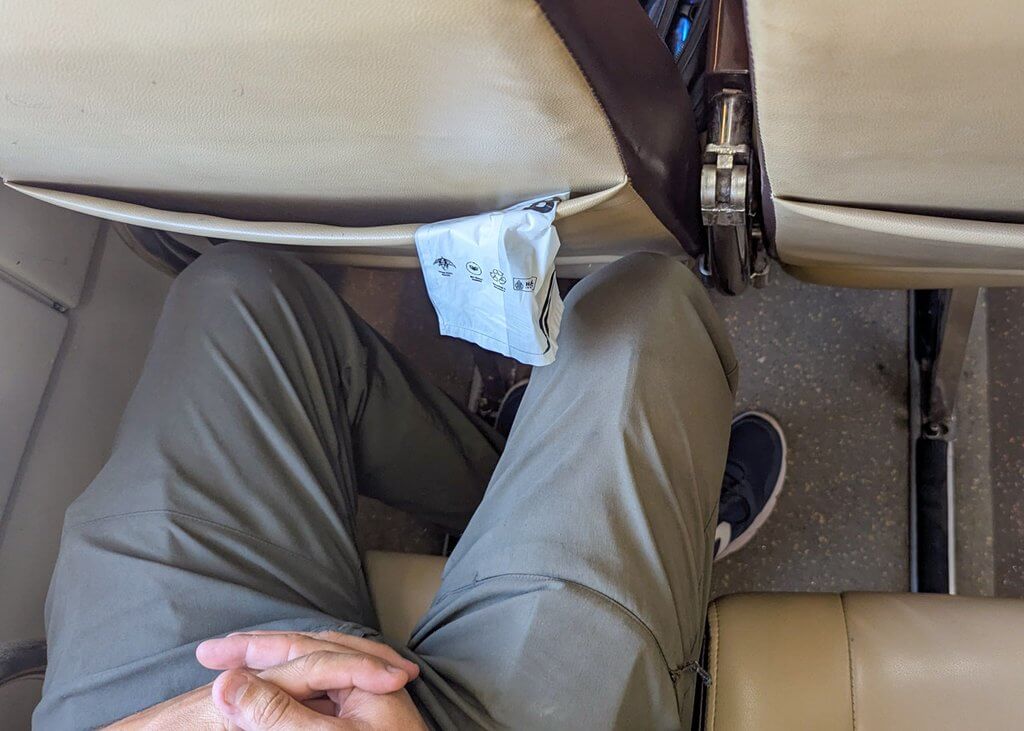
Note that rows 10 and 11 are the centre of the carriage, so these pairs of seats face each other. It’s quite pleasant if you’re travelling in a group of four, but should be avoided otherwise as you’ll spend the whole journey staring at strangers, with even less legroom.
Both types of carriages are fully air-conditioned and have power points, armrests and tray tables. Typically the trains will be made up of three Executive carriages and three Premium Economy. There’s also a catering car, more on that below.
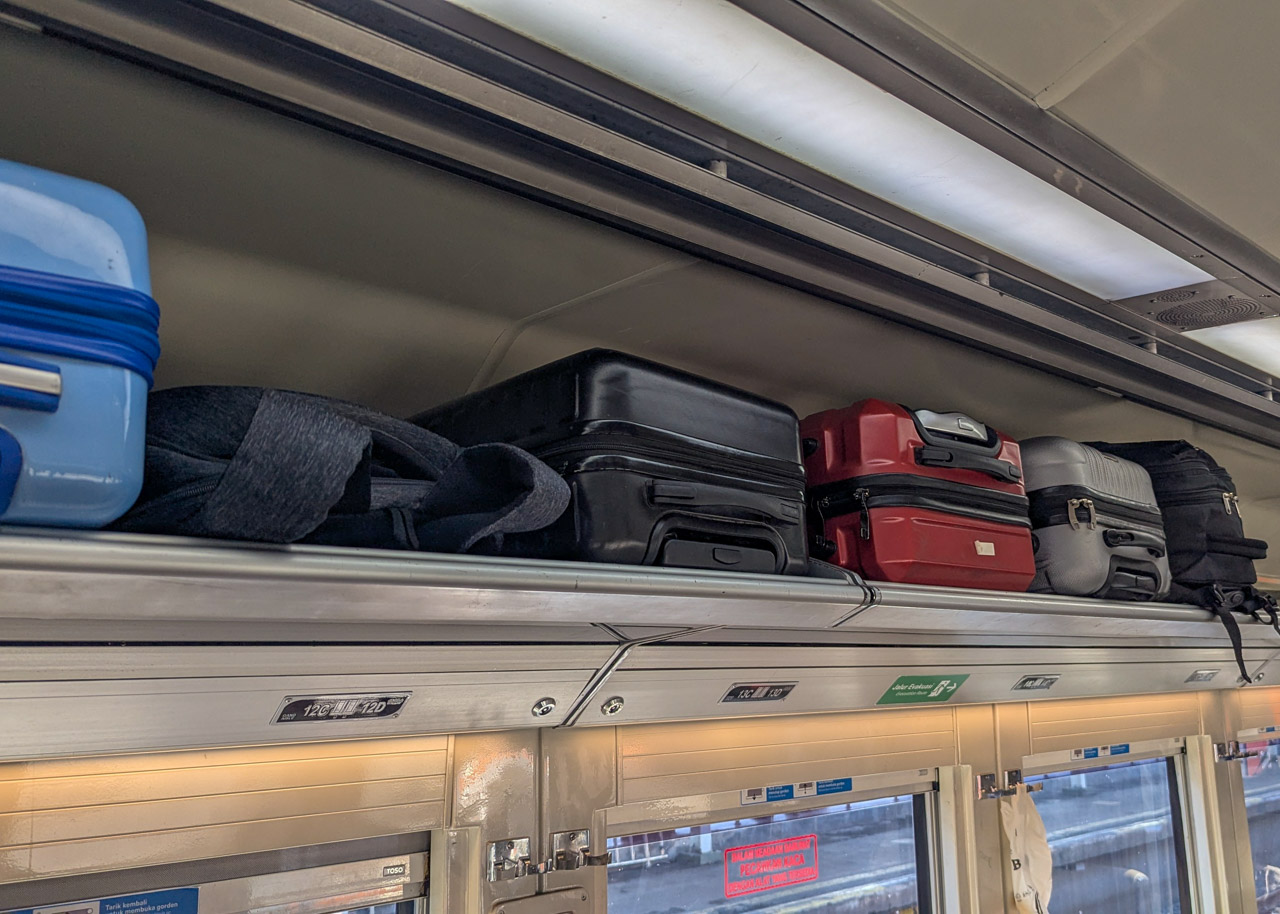
Luggage storage is the same in both classes but life will be significantly easier if you’re travelling with backpacks or smaller, soft suitcases. Many tourists board the train with huge rigid suitcases that don’t fit into the overhead racks, so there’s sometimes a battle to squeeze these cases into the luggage racks at the end of the carriage. It delays boarding and blocks the aisles, so do try and reduce your luggage size if at all possible. Technically, each passenger is allowed 20kg, and this is often enforced if you’re obviously exceeding the limits.
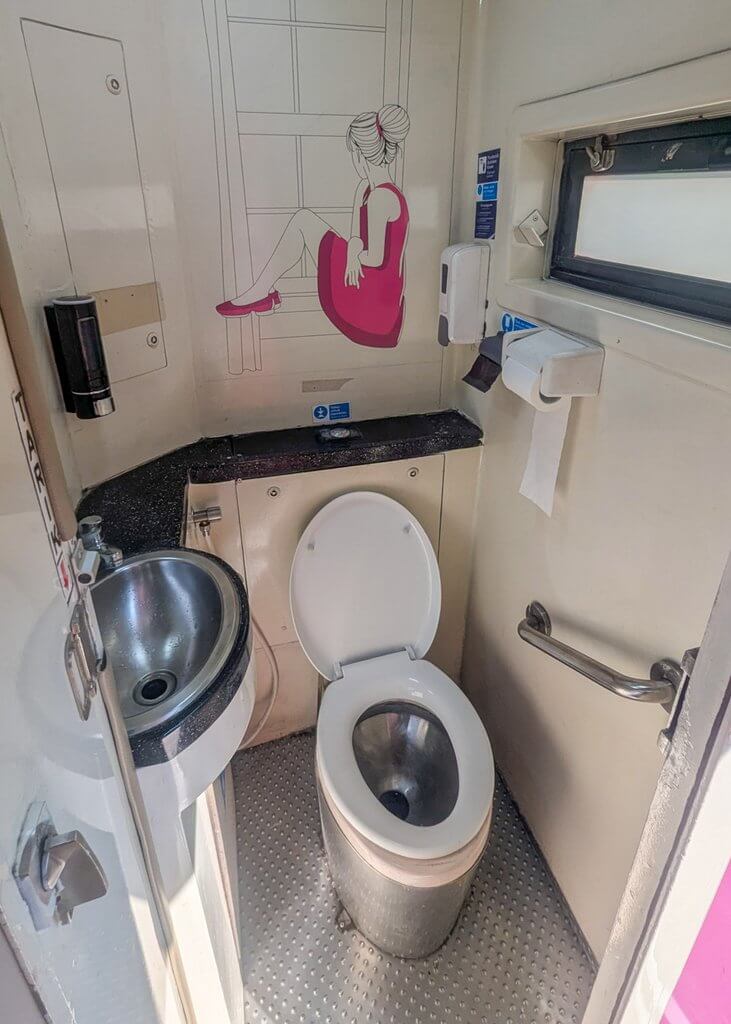
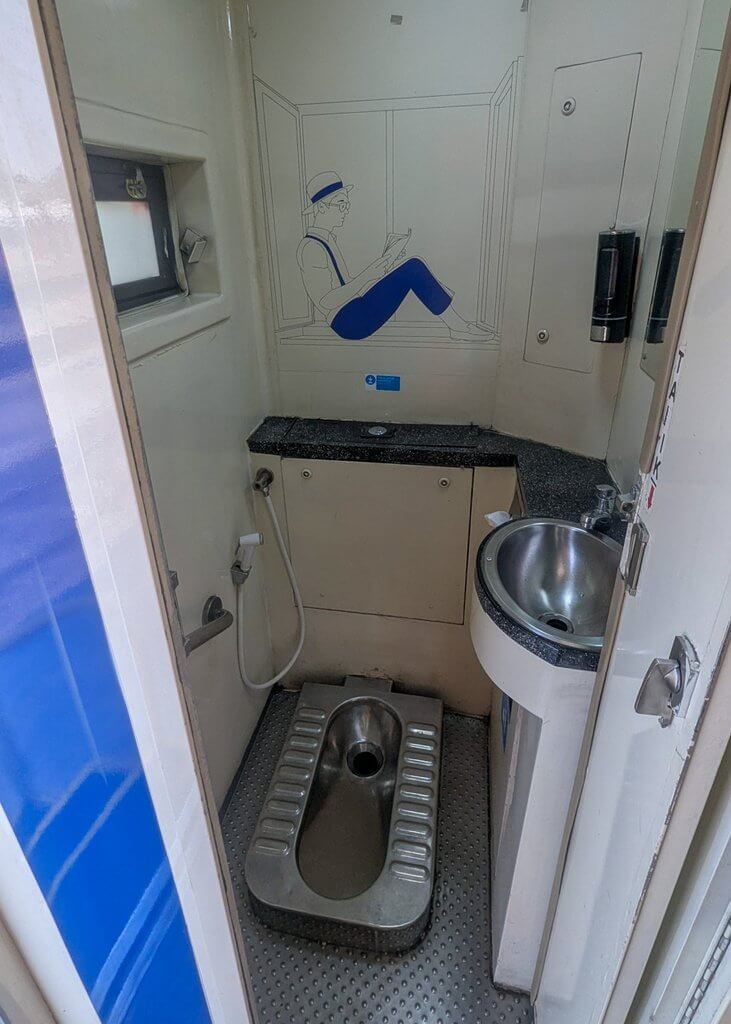
Toilets are located at the end of each carriage. Economy class has Western-style and ‘squat-and-drop’, Executive tends to be Western-style only, with separate male and female toilets. Train guards often suggest you use either toilet if there’s a queue and there’s no real difference once you’re inside. Both classes’ toilets are cleaned regularly and kept in decent condition.
Catering options
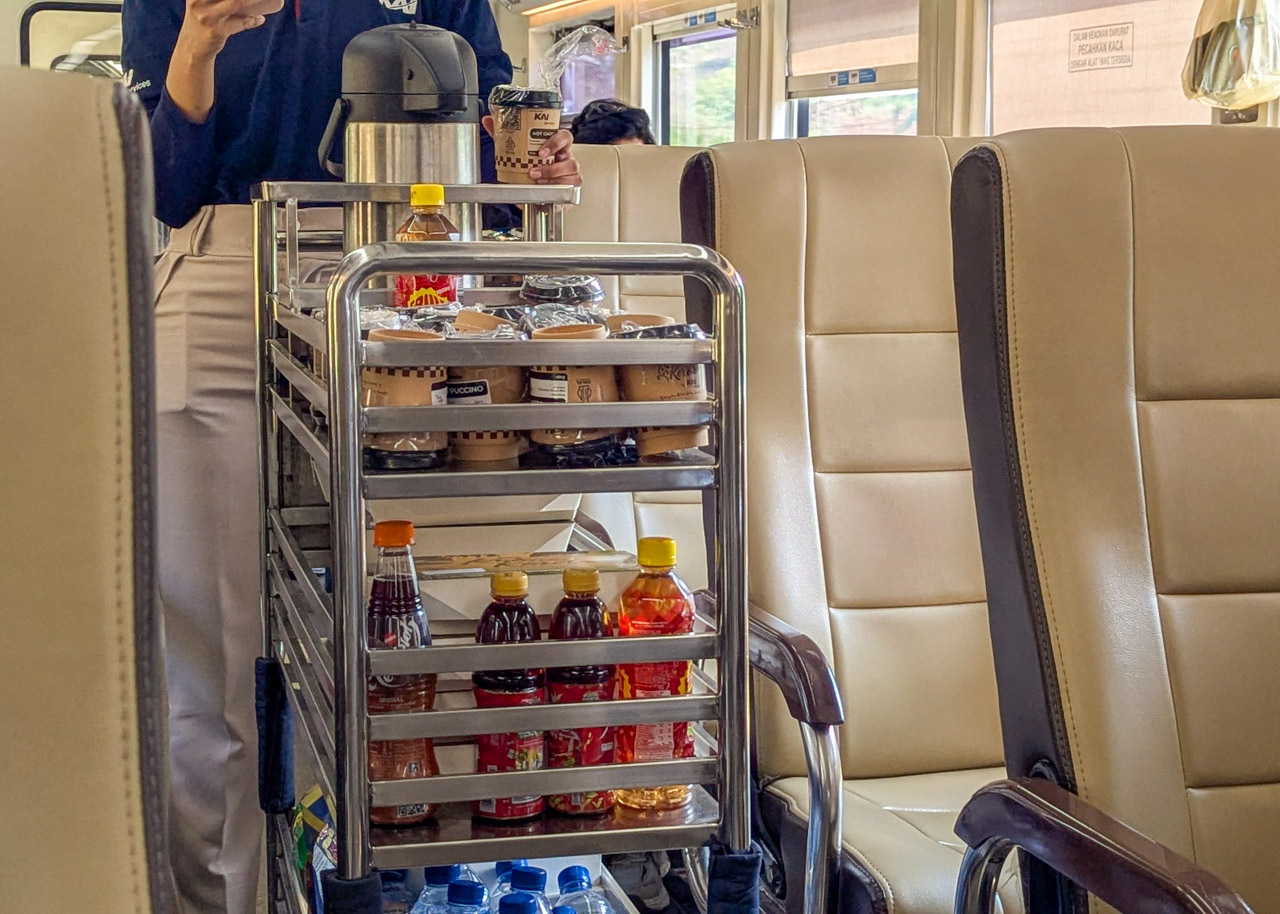
A well-stocked catering trolley is pushed down the aisle every thirty minutes or so, selling hot meals (noodles, rice, etc), snacks, instant noodles, coffee and soft drinks. Payment is by cash or e-wallets.
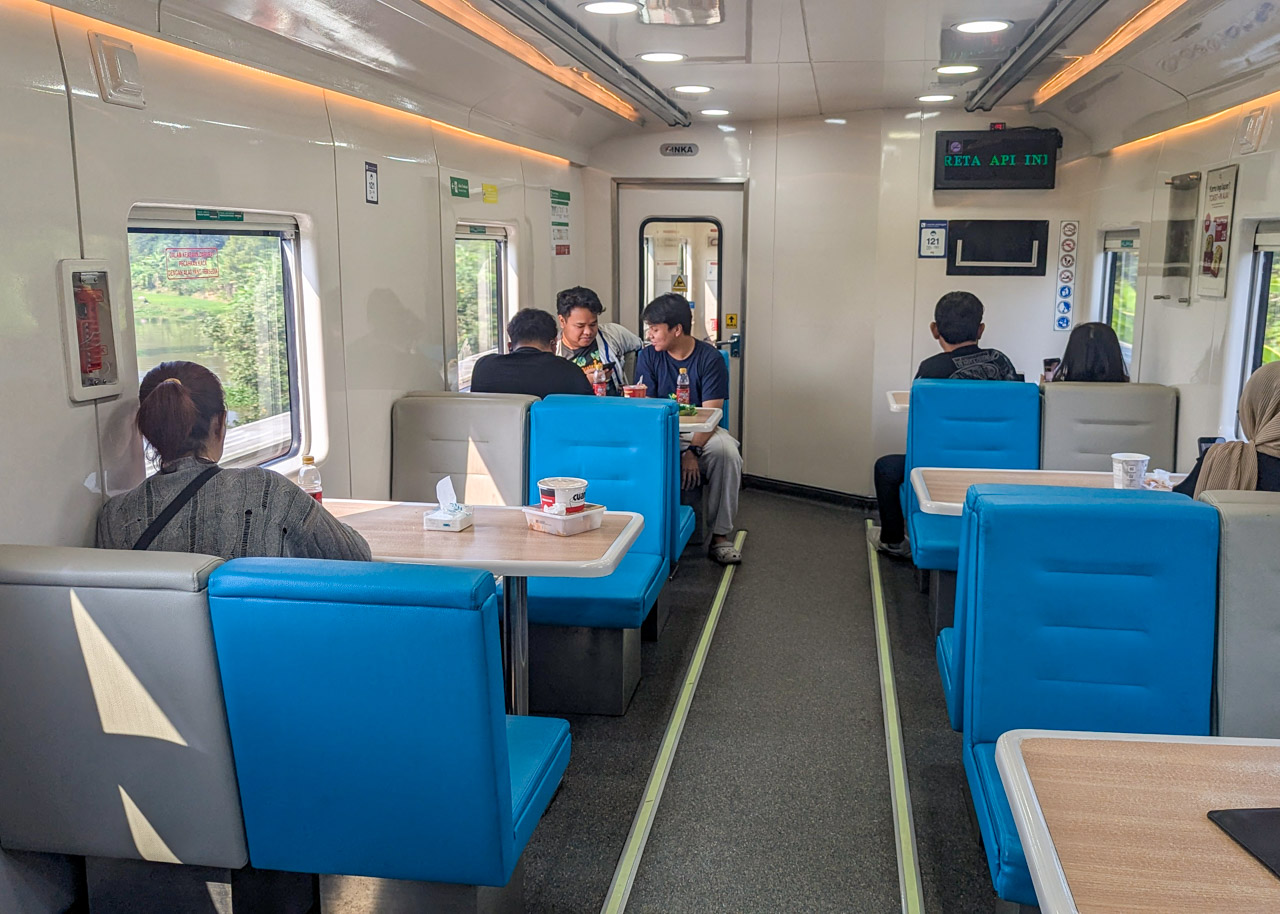
If you’d prefer to eat at a proper table, you can also walk down to the restaurant car. This has seating for around twenty people in groups of four, and is a pleasant place to enjoy food and drink. It’s basically the same choice offered by the trolley but do be warned that stock is limited and, after the first three hours of the trip, choices become limited.
Unlike in some other Southeast Asian countries, food vendors don’t come onto the train at station stops.
Journey description
Travelling from West to Central Java, this is one of the most iconic railway journeys in the country, passing through a volcanic region that’s both beautiful and dramatic. After leaving Bandung city centre, the train slowly trundles through the countryside, with distant views of mountains always on the horizon. Arguably the most attractive section of the route comes around the town of Leles (around one hour into the journey) as the train winds its way through narrow mountain passes and alongside rice fields.
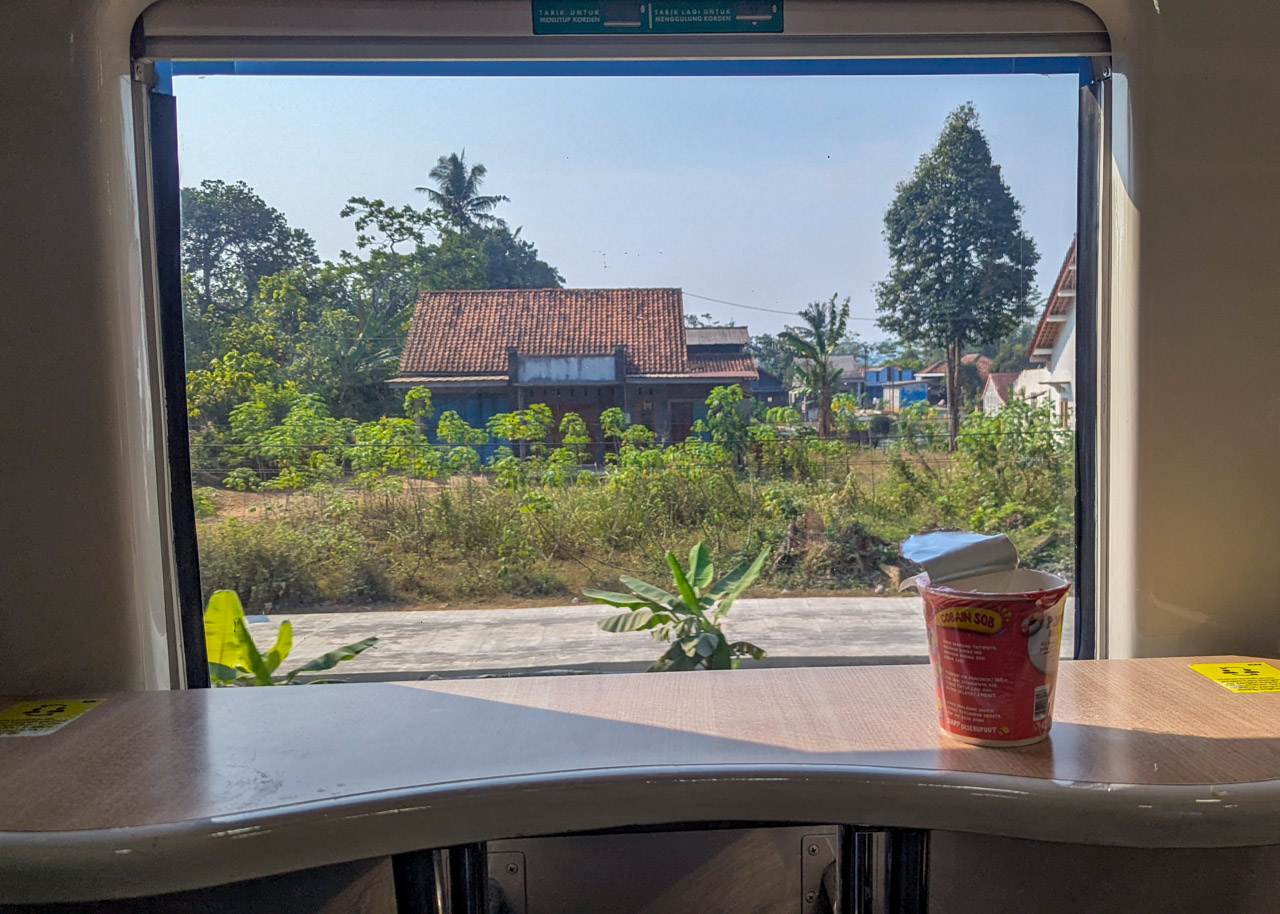
At this point of the journey you’re around 800m above sea level but during the next 100km the altitude drops sharply, almost back down to sea level as you pass into Central Java near the port city of Cilacap. The rest of the journey is in the fertile agricultural valleys of Central Java, with rice fields and farmland either side of the train. It’s almost impossible to miss the dramatic volcanic scenery that frames the approach to Yogyakarta, reminding you of why so many tourists head to the part of Southeast Asia.
Yogyakarta is known as the cultural capital of Indonesia and the train arrives at the well-organised central station, also known as Yogyakarta Tugu, named after the nearby monument. The station is one of the best located in the country, only a short walk from the famous Jalan Malioboro. If you’re staying further afield, Grab and Gojek cars be booked via the app, with the pickup point directly outside the main exit.
If you have found this website useful for planning your Southeast Asia train travel, you can show your support by buying me a coffee. Thanks so much!
