

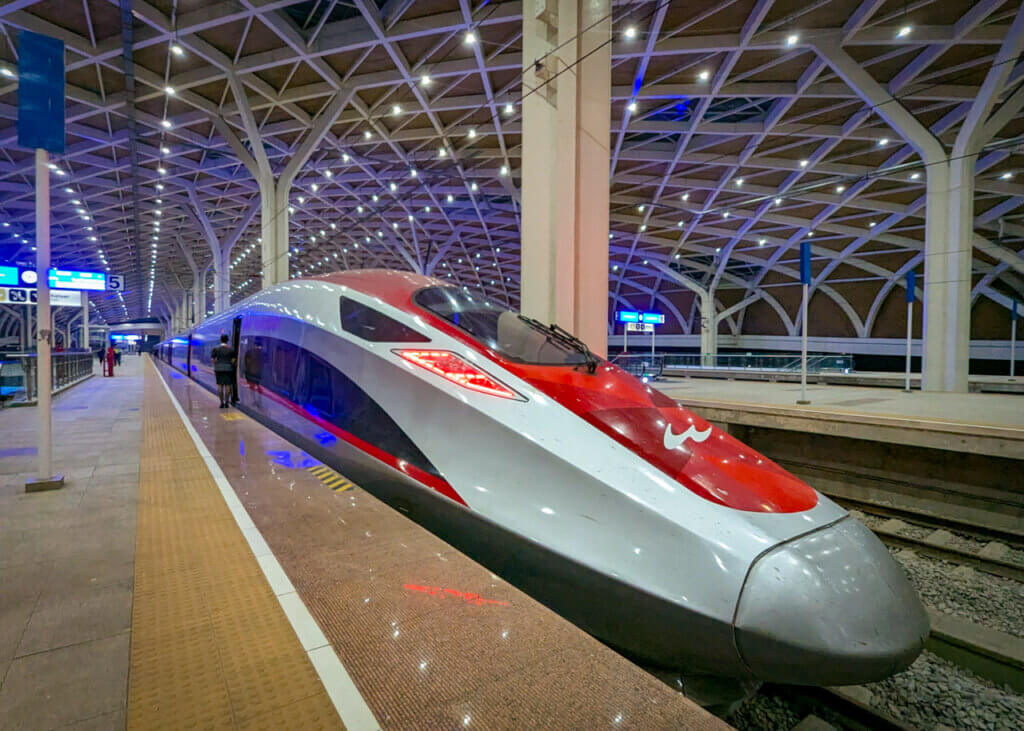
Holding the title of the first high-speed train in Indonesia, Southeast Asia, and the Southern Hemisphere, the fantastically named Whoosh is undoubtedly a trailblazing addition to the region’s railway network. If your only experience of Indonesia’s railways so far has been its atmospheric but ageing rolling stock, stepping onboard the glistening high-speed carriages will feel like a glimpse into the future.
But the grass isn’t necessarily greener on the other side. Although the new line has dramatically reduced travel times between Bandung and Jakarta, with journeys now taking just 50 minutes, logistical and pricing obstacles have reduced the success of the line. While the high-speed train may seem like the obvious choice, there is an alternative less-direct route that can offer an easier overall journey.
Disclaimer: This website contains affiliate links. Should you click to purchase, it is at no additional cost to you, but we receive a small commission.
Have questions? Join the Southeast Asia Trains Facebook Group.
Route map and details
There are three train options from Bandung to Jakarta. Two of them use the high-speed train and one takes the winding (but much slower) route on the inter-city mainline.
Option #1:
Bandung to Jakarta on the high-speed train
Journey time: 50 minutes (but factor in long transfer times)
Whoosh trains use the newly-built high-speed line connecting the outskirts of Bandung with the outskirts of Jakarta, via Padalarang and Karawang. It is worth noting that the stations are not located near the city centres, so you will need to use public transport or a taxi for the onward connection.
Option #2:
Shuttle from Bandung to Padalarang, then high-speed train
Journey time: 1 hour 10 minutes
Bandung’s high-speed station, Tegalluar, is located almost an hour’s drive from the city centre, leading to complaints that many of the benefits of high-speed rail were being lost. To address this, the railway operator has introduced a free shuttle train from Bandung’s main station to Padalarang, where you can connect with high-speed services to Jakarta. If you’re based from Bandung and want to use the high-speed train to Jakarta, it’s easier to take the shuttle to Padalarang and board there, rather than travelling to Tegalluar, which is a substantial drive from Bandung’s city centre.
The shuttle timetable is designed to align with high-speed departures, making the journey relatively seamless.
Option #3:
Bandung city centre to Jakarta city centre using normal train
Journey time: 3 hours
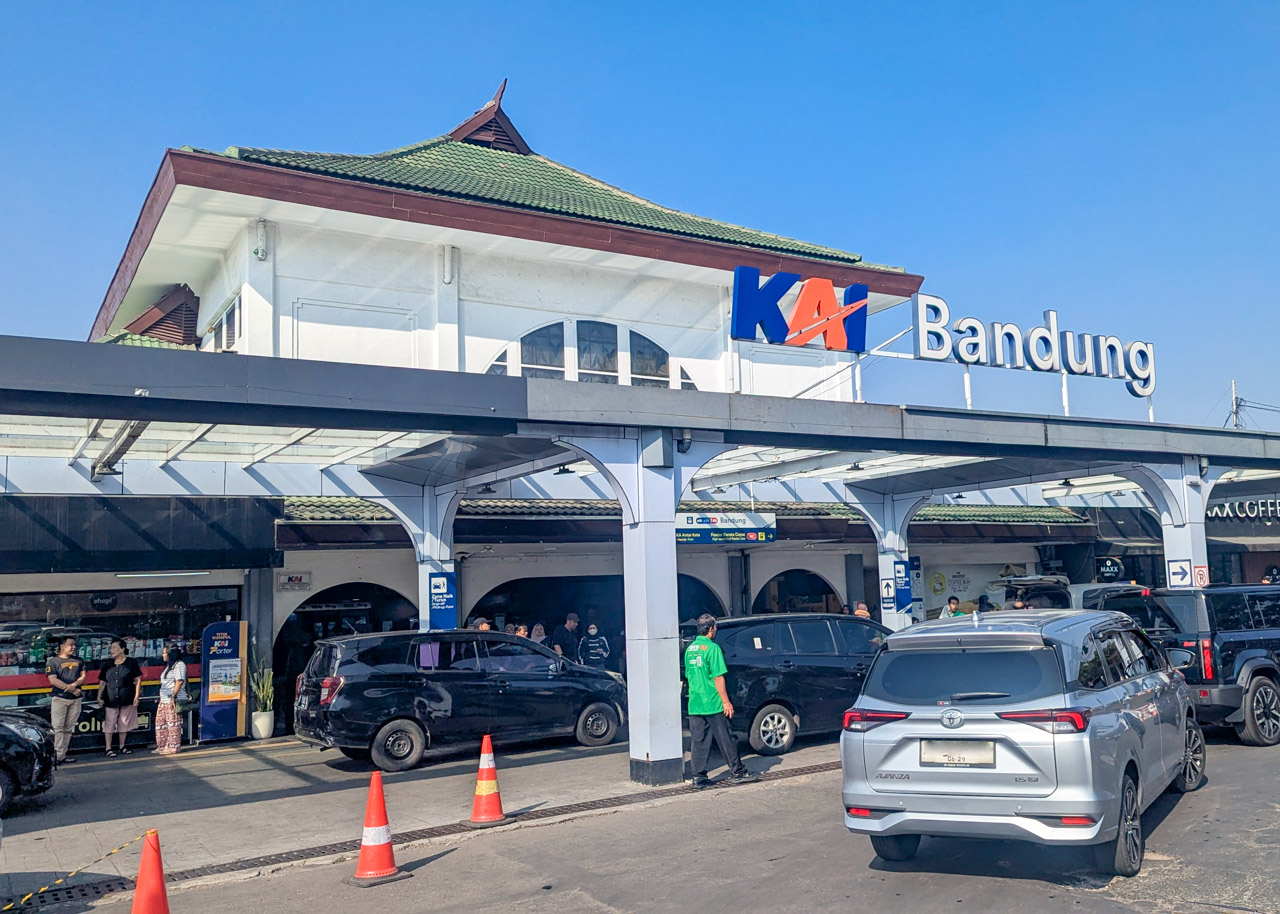
Despite the appeal of high-speed rail, many travellers still opt for the original slow train, known as Parahyangan, which runs from Bandung station to Jakarta’s Gambir station, both conveniently located in the city centre.
Although the journey takes longer (three hours versus one hour), the overall travel time is often similar once you factor in the trip to and from the high-speed stations. It can also be a much simpler and more straightforward journey. Tickets are typically around half the price of the high-speed service.
Timetables
Click here to check all Indonesia train times
Option #1:
Bandung to Jakarta on the high-speed train
There are 31 high-speed trains per day from Bandung to Jakarta (28 on Sundays), departing at 5 and 35 minutes past the hour.
Option 2:
Shuttle from Bandung to Padalarang, then high-speed train
Recognising that the new high-speed station at Tegalluar is located far from Bandung city centre, a free shuttle service has been introduced between Bandung and Padalarang, where passengers can connect with high-speed trains to Jakarta.
The shuttle from Bandung to Padalarang is scheduled to arrive 19 minutes before high-speed departures to Halim Station in Jakarta, allowing plenty of time to make the connection.
The first three shuttle services of the day operate from Monday to Saturday only.
The table below shows the times of the shuttle service from Bandung to Padalarang, then the connecting high-speed train times from Padalarang to Jakarta.
Option #3:
Bandung city centre to Jakarta city centre using normal train
Not everything on the Bandung to Jakarta route is high-speed. The original train between the two cities is still running and remains a popular option. For many travellers, the slower pace is part of the appeal, and it is significantly cheaper as well.
One clear advantage is the location of the stations, both in the heart of the city and easy to reach on foot or by public transport.
Eight trains run each day from Bandung to Jakarta’s Gambir station, with a journey time of around three hours.
How to buy tickets
Click here to book train tickets from Bandung to Jakarta.
The easiest way to buy train tickets in Indonesia is online rather than going to the station. You do pay a very small commission but the ease and convenience makes it worthwhile.
12Go is the best website to use and accepts international credit cards. It's also a good place to check timetables and prices.
How much does it cost?
Click here to book train tickets from Bandung to Jakarta.
Tickets from Bandung to Jakarta are significantly more expensive on the high-speed train compared to the normal, slower train and it’s one of the reasons for the stubbornly low passenger numbers.
High-speed train prices:
| Class | Cost (INR) |
|---|---|
| Premium Economy | 250,000 |
| Business | 450,000 |
| First | 600,000 |
The prices for the normal train (Parahyangan) from Bandung to Jakarta start from:
| Class | Cost (INR) |
|---|---|
| Ekonomi | 100,000 |
| Eksekutif | 150,000 |
| Eksekutif Luxury | 400,000 |
| Panoramic | 350,000 |
The shuttle train from Bandung to Padalarang is free of charge for passengers with an onward high-speed train ticket.
What to expect on board the high-speed train
The experience onboard a Whoosh train is unlike anything else in Southeast Asia, with ultra-modern carriages, bright lighting and no expense spared in any of the three classes: First, Business, and Premium Economy.
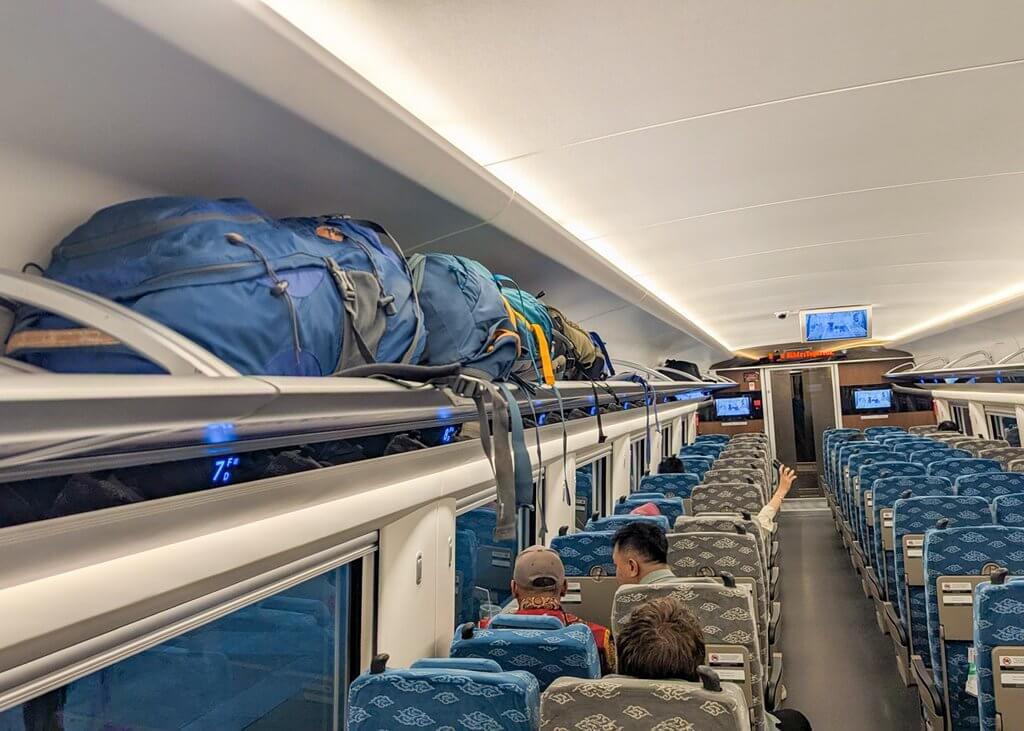
Premium Economy is the most basic option and offers the cheapest ticket price, but it’s still a significant upgrade from economy class on any other Indonesian train. Features include:
- air-conditioned carriages
- power points
- tray tables
- window blinds
- reclining seats (although they are a little on the narrow side)
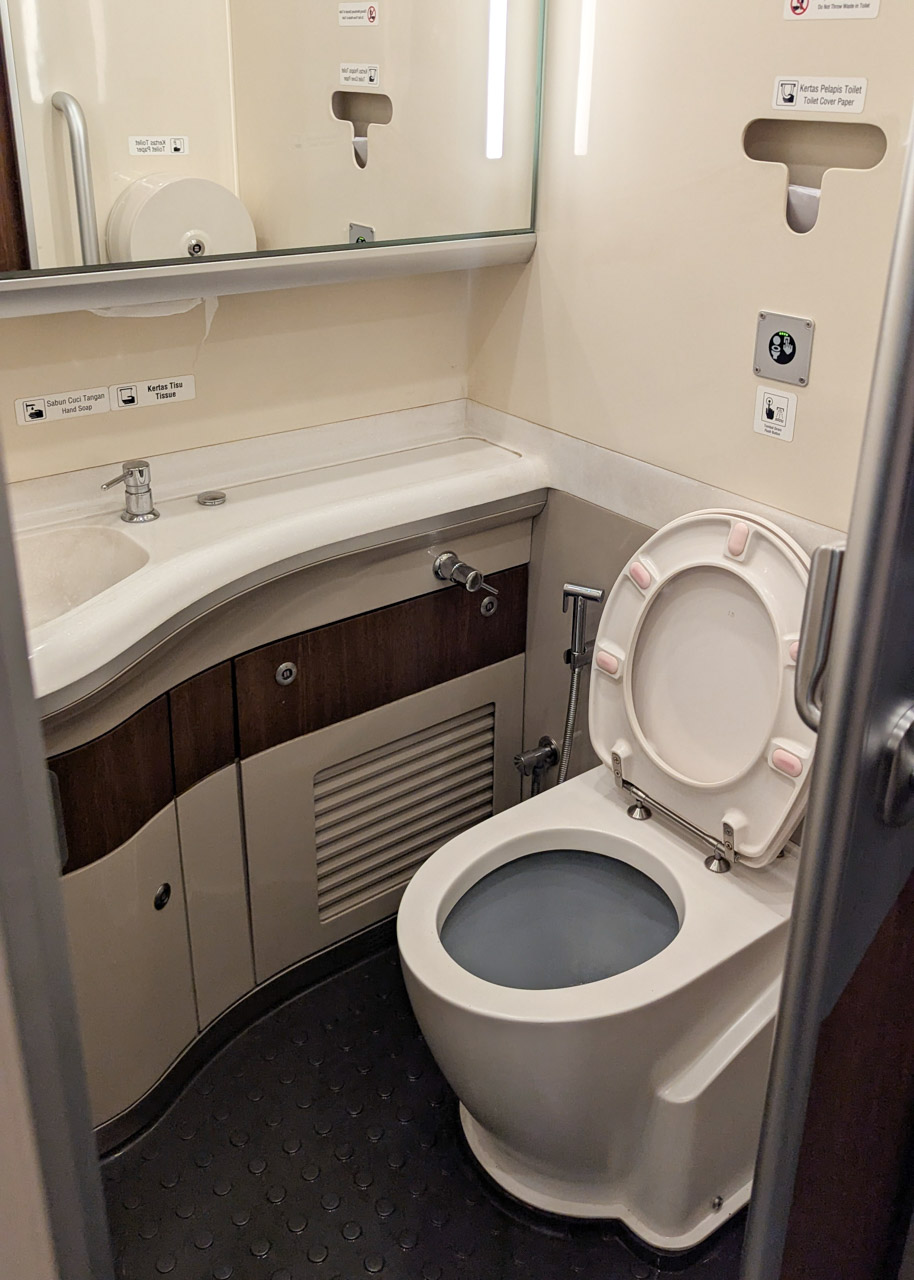
- pristine toilets
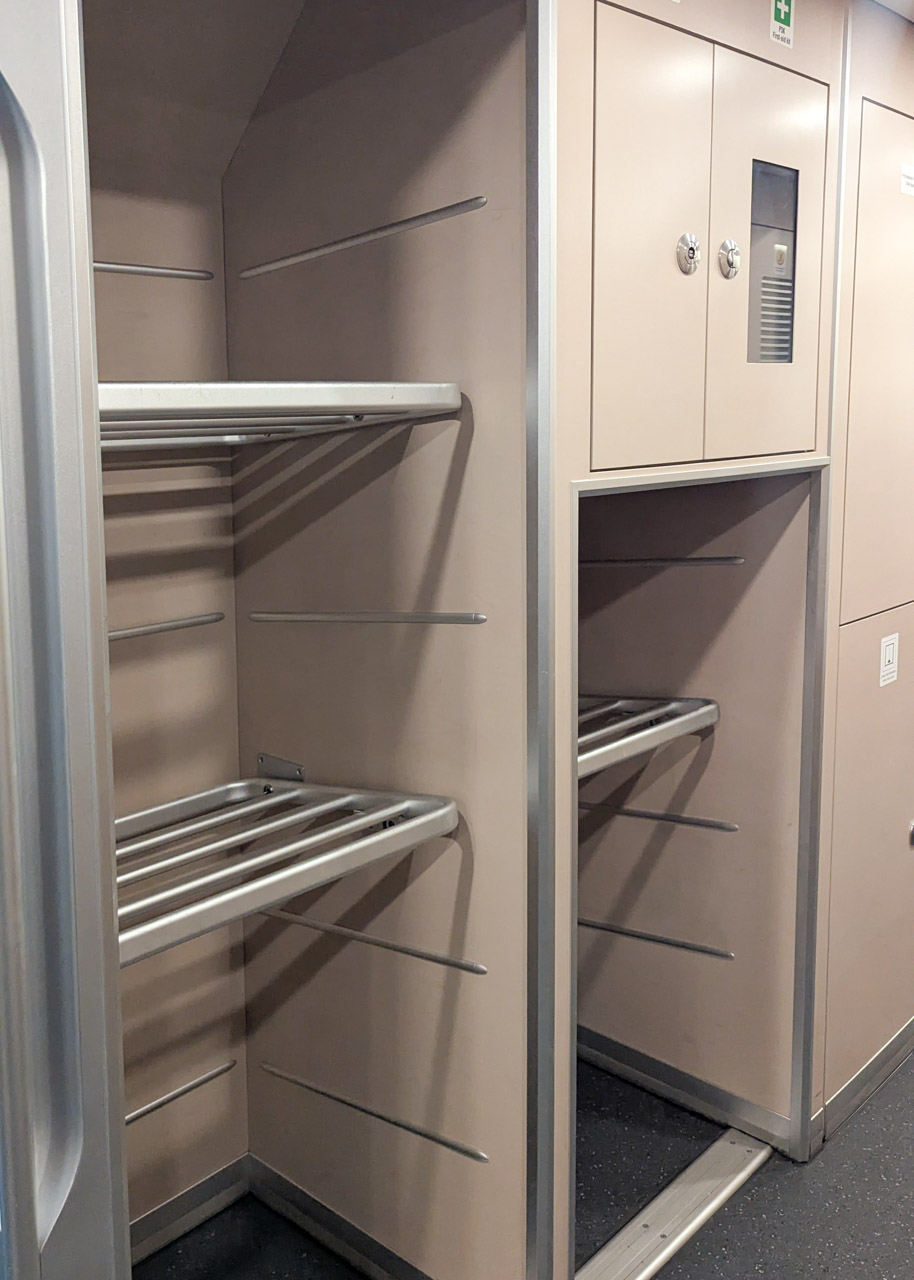
- ample luggage storage (either at the end of the carriage or on the overhead racks).
Note that seating is in a two by three layout, so choose seats wisely if you’re travelling in a group. As we mentioned earlier, passenger numbers on the high-speed line haven’t quite reached expected levels, so the carriages are often quite empty during the short journey, particularly in Business and First Class.
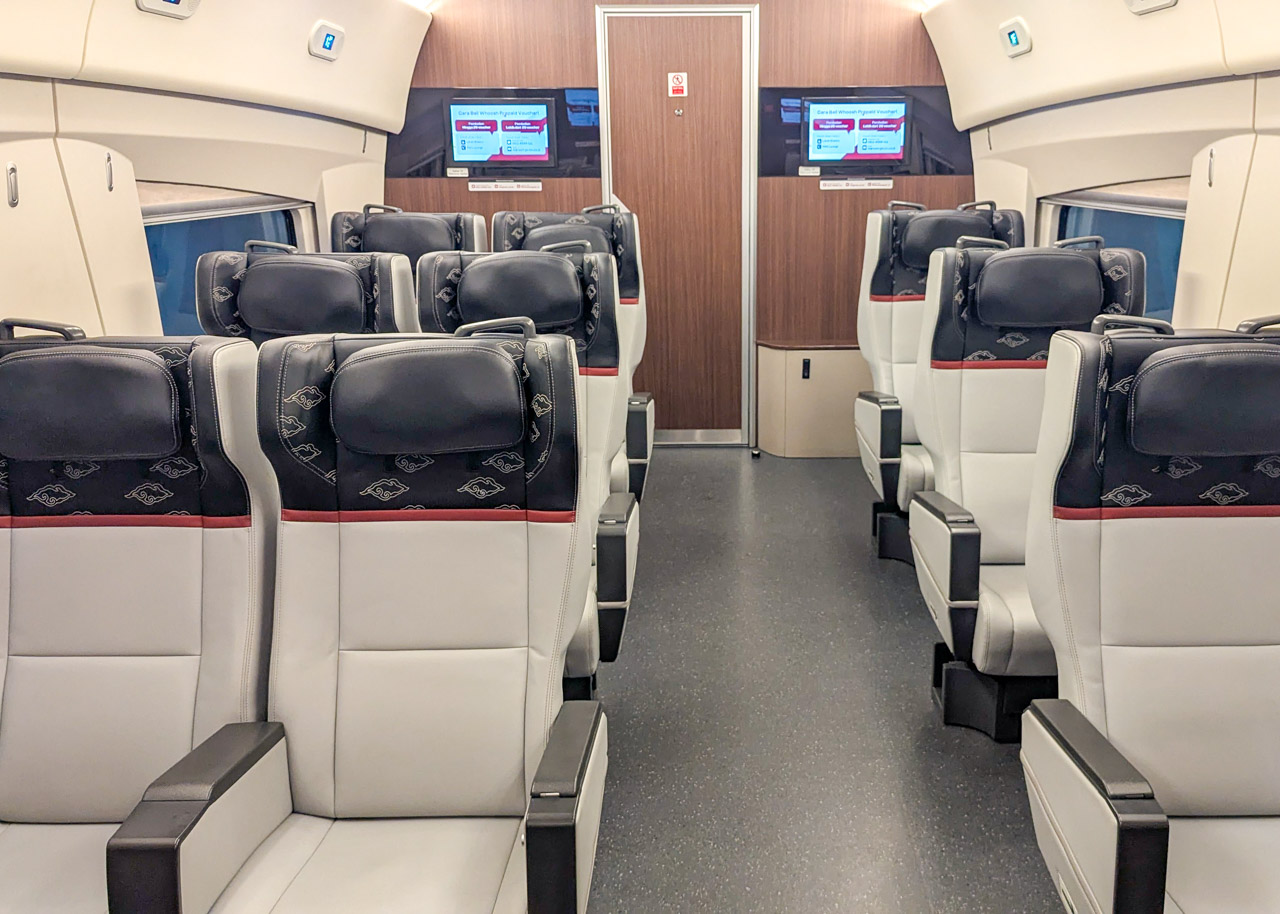
Business and First Class are a significant upgrade from Premium Economy, both in terms of price and comfort. First Class carriages only contain nine seats, in three rows of 1 x 2. Plush leather seats make the journey incredibly comfortable and you have your own dedicated member of staff to show you to your seat and take care of you during the journey.
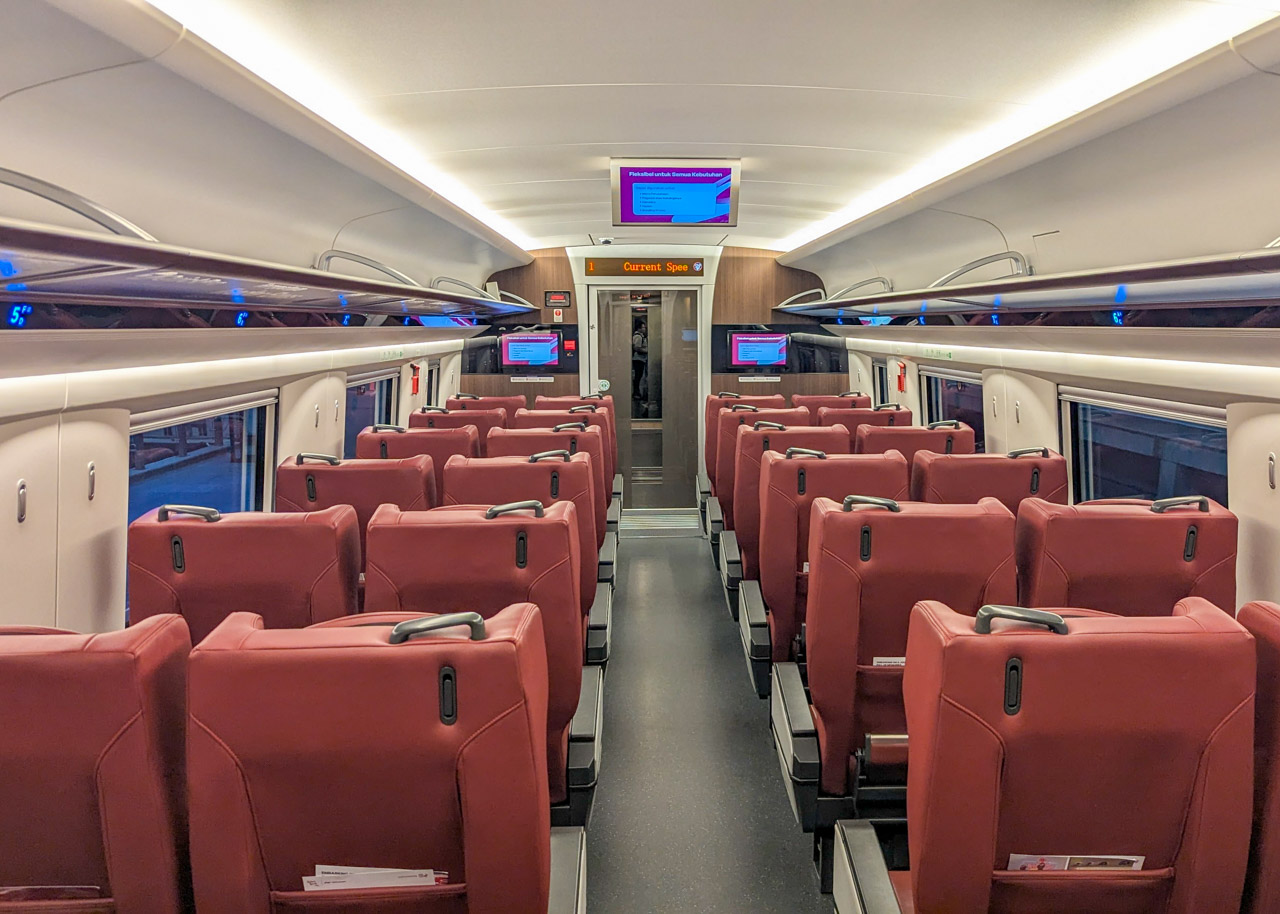
Business Class offers a slightly lower level of comfort to First Class, with seats lined up in a 2 x 2 formation. Both classes offer a free snack and access to a lounge at the stations.
As it’s such a short journey, it can be difficult to justify the extra cost of Business or First class and the carriages are often virtually empty. But, if you fancy a treat and don’t mind the extra expense, it’s a luxurious way to travel. There is also a dedicated carriage on the feeder train for Business and First Class, but it’s identical inside, the only tangible benefit is fewer passengers to contend with.
Catering options
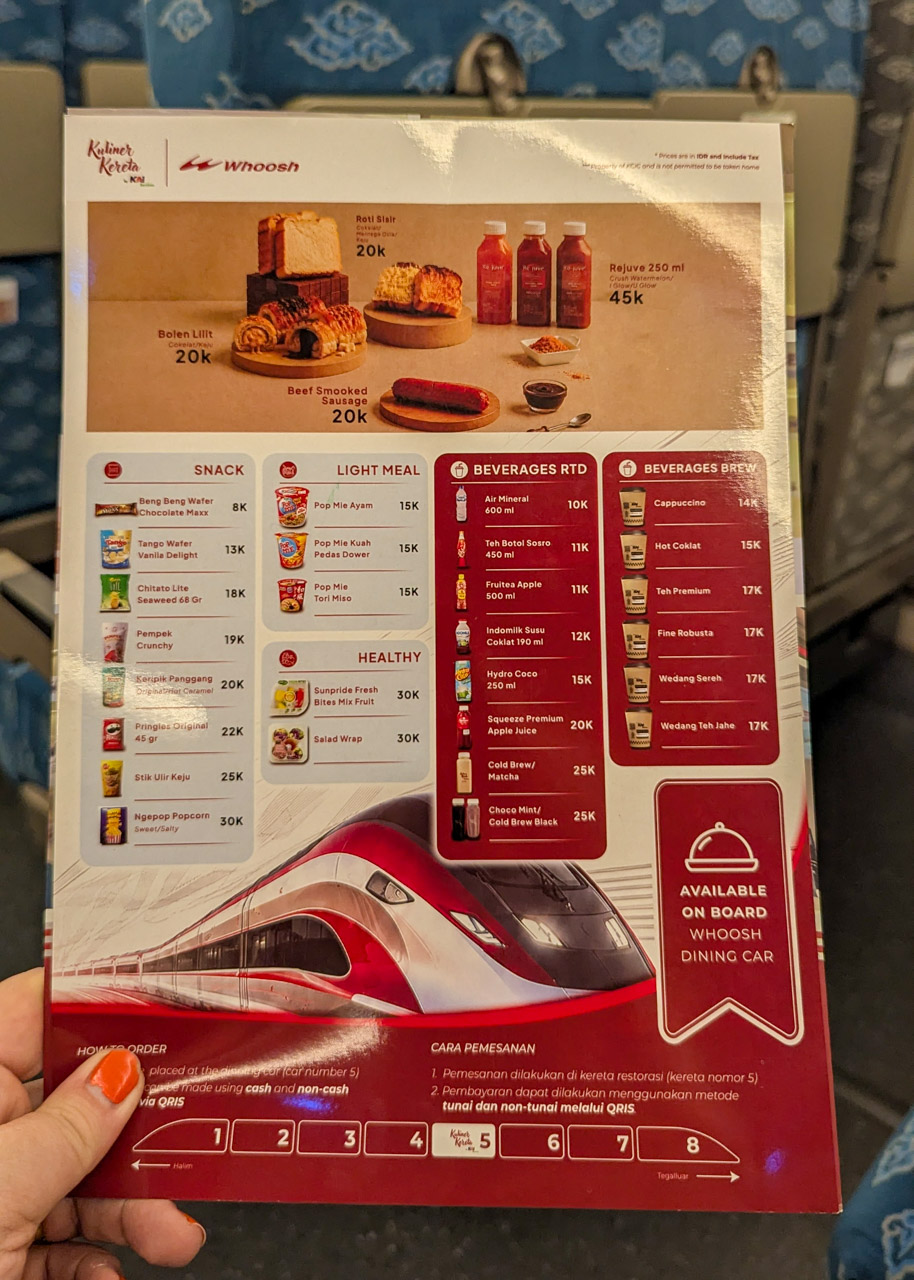
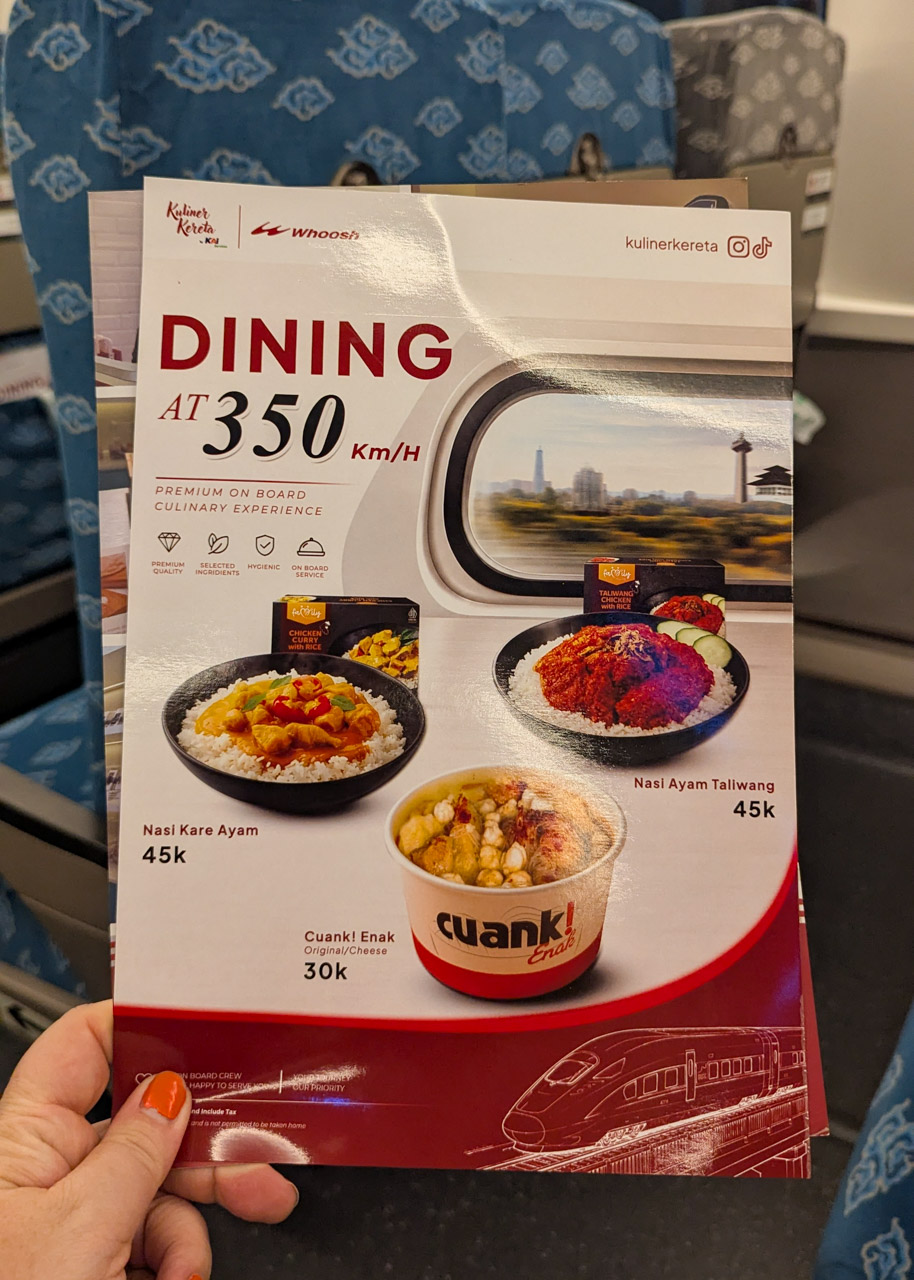
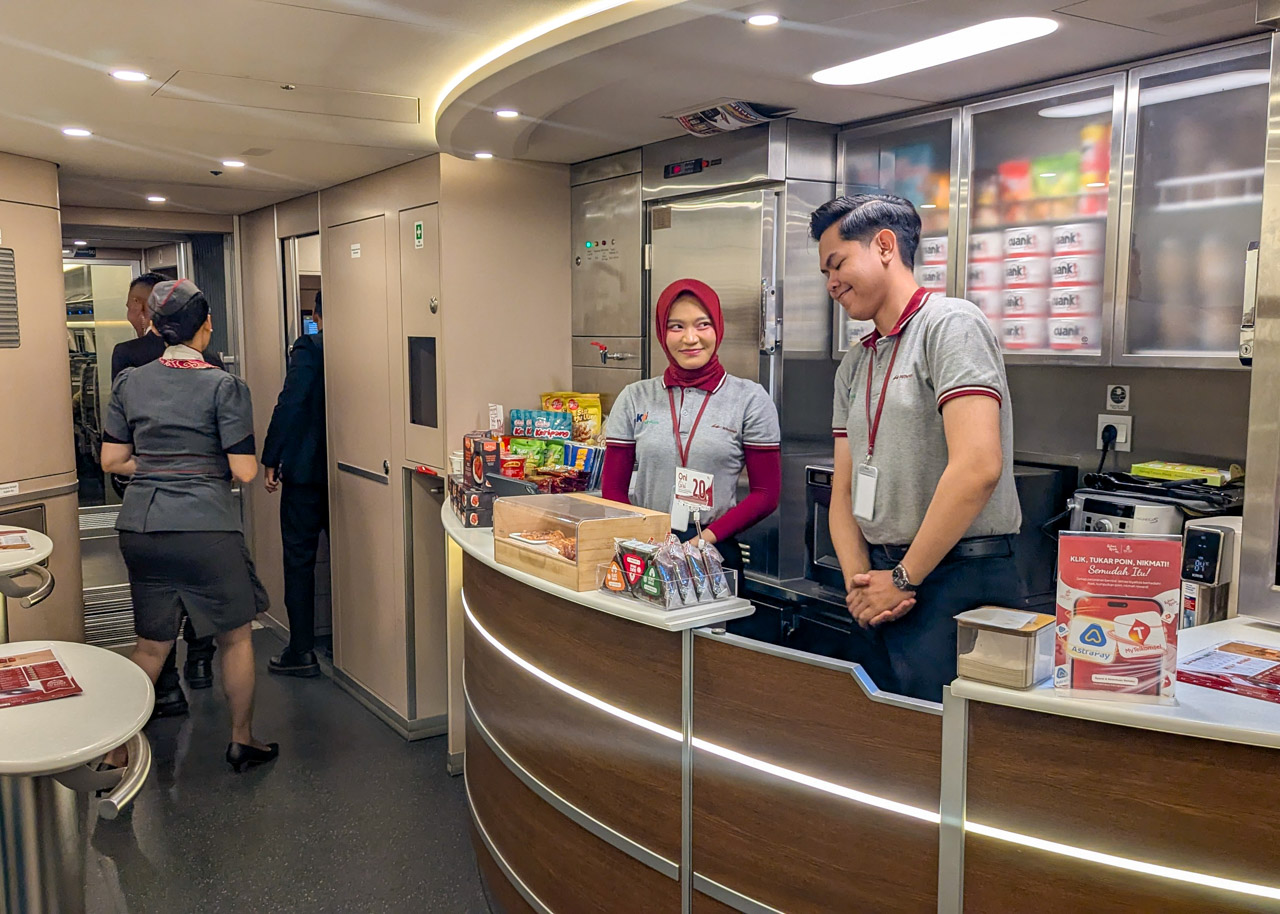
Food and drink is served from the catering car in the middle of the train (carriage number 5). The refreshments on offer are a step up from what you’d find on normal trains in Indonesia and includes energy drinks, several types of coffee, juices, baked goods and salads.
Payment can be made with cash or QRIS.
Journey description
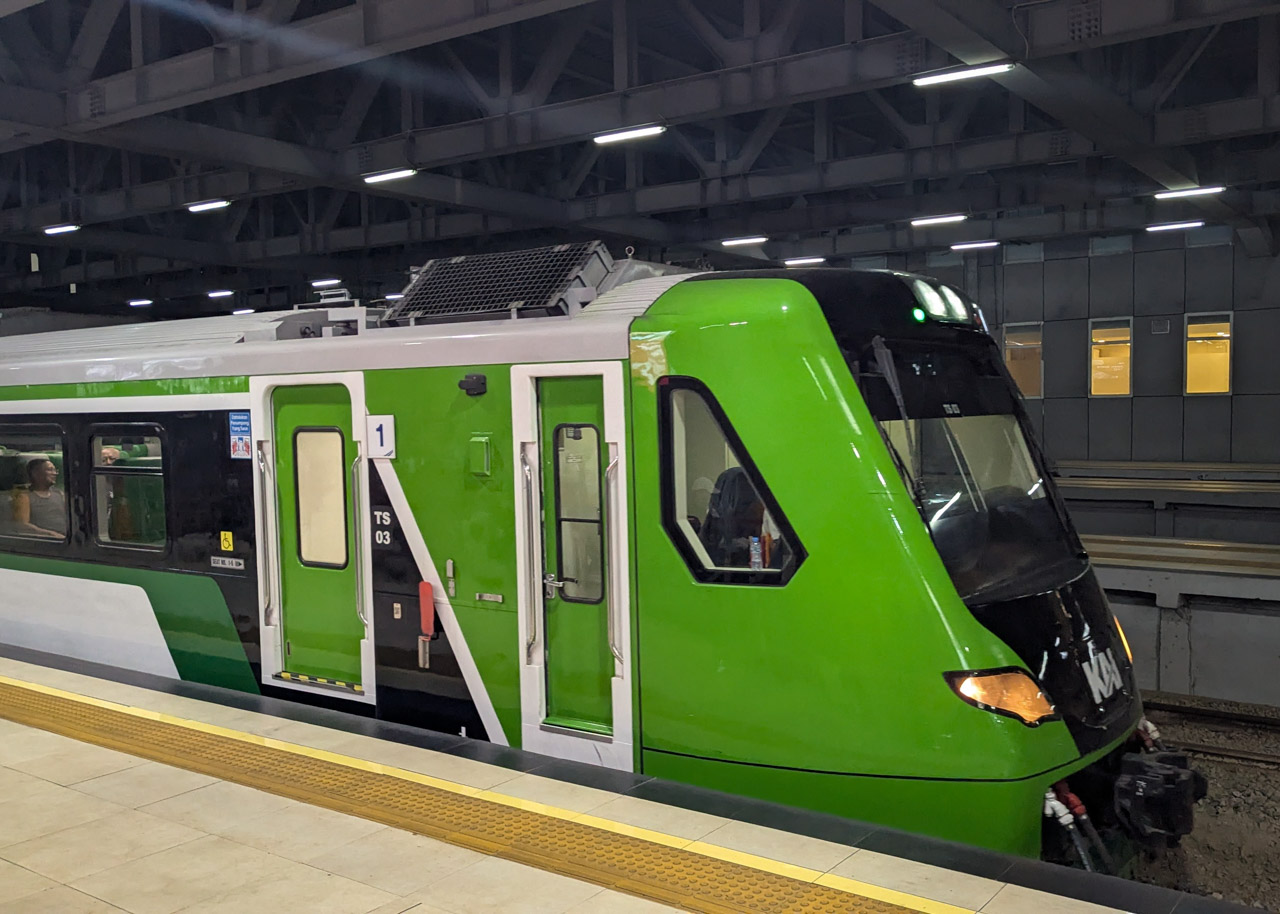
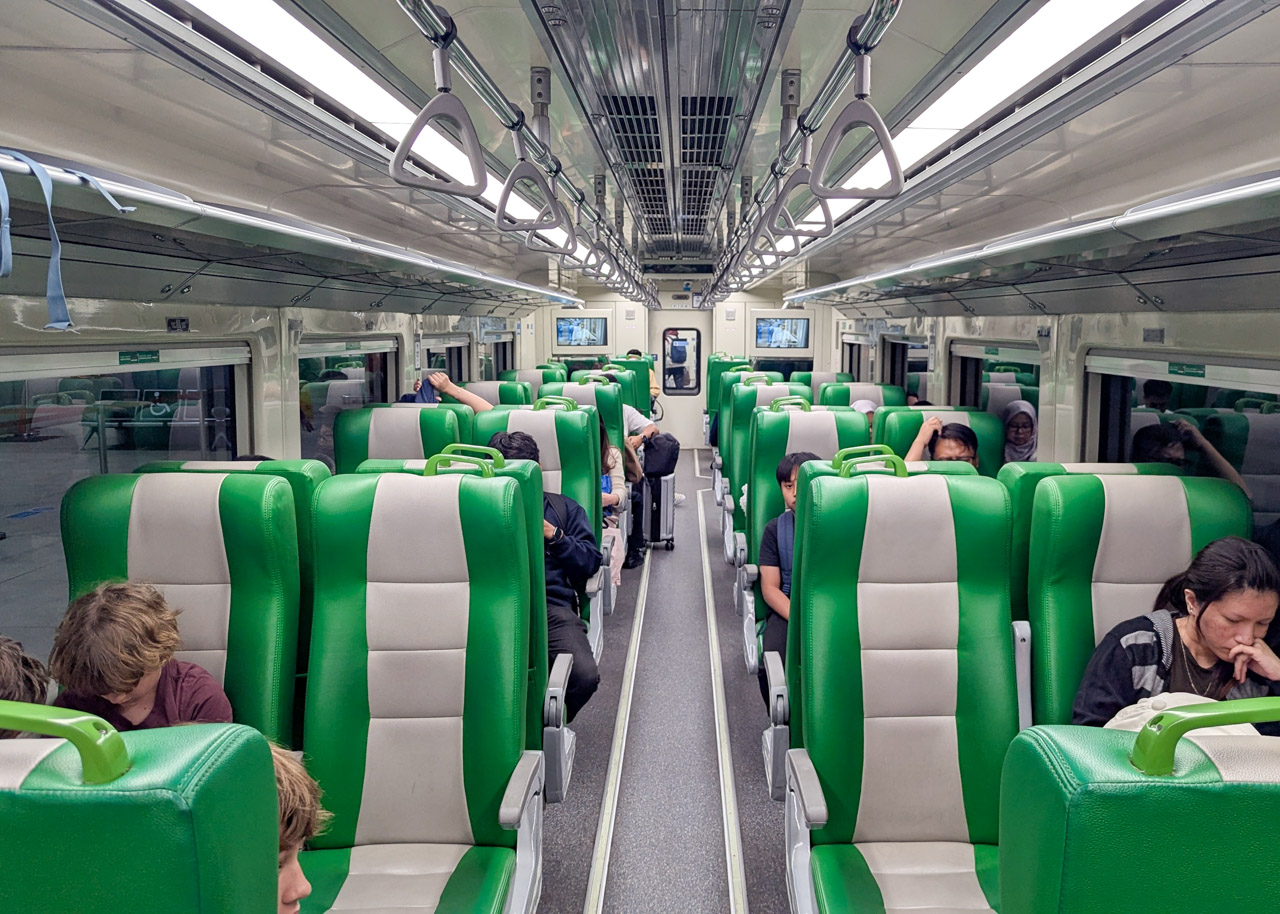
Follow signs at Bandung station for the KCIC Feeder Train to Padalarang and then scan your high-speed train QR code to gain access to the platform. One carriage is designated for Business and First Class passengers, the other three are for Premium Economy. The feeder train can get quite full at times so it’s not always possible to get a seat, but the journey passes quickly (twenty minutes).
When the feeder train arrives at Padalarang, follow the crowds up the escalator and onto the high-speed train platform. From here onwards, you’re treated to the full, modern experience of riding on the newest and most expensive railway line in the country. Friendly, professional staff will greet you on the platform and point you in the right direction to your carriage, all of which are sparkling clean and full of thoughtful touches.
As the train glides westwards out of Padalarang, there’s a noticeable sense of anticipation onboard (at least from first-time travellers and rail-enthusiasts) as the train picks up speed through the suburbs, first up to 100km/h, then 200, before reaching top-speed of 350km/h through the countryside of West Java.
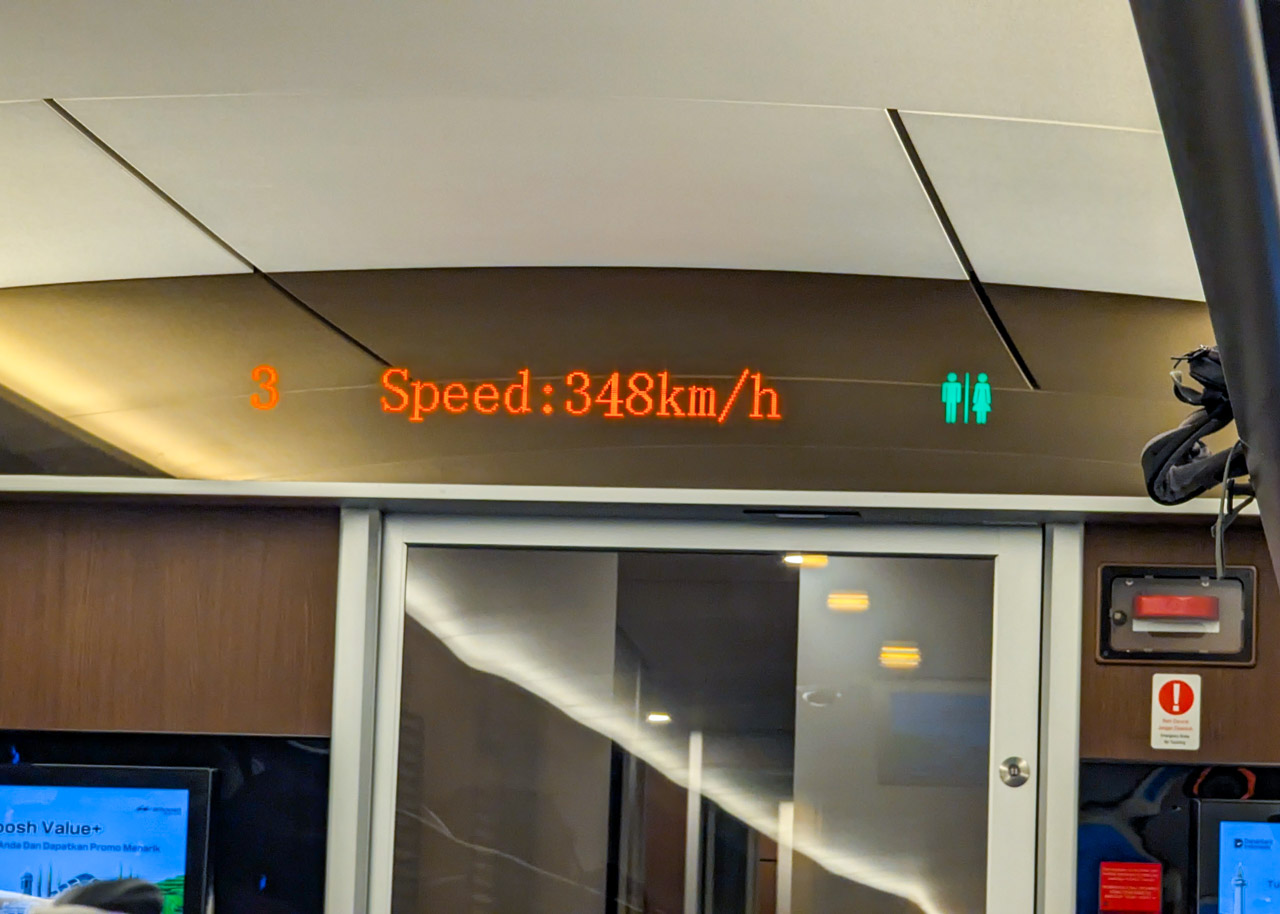
One annoyance is the almost constant stream of announcements made during the journey, relaying safety, timetable and catering information. After they have been repeated in both Indonesian and English, there is barely any time when the train is silent. Aside from this, the journey is relaxing and carefree, and it comes as a slight disappointment when you realise the Jakarta’s Halim station is fast approaching.
By most measures, Jakarta is the largest city in the world but you’re sheltered from the hustle and bustle when you first arrive into Halim station. It has a similar atmosphere to Bangkok’s Krung Thep Aphiwat station, both having been built to handle an anticipated surge in passenger numbers over the next few years. For the time being, Halim station can feel eerily quiet and sanitised, a welcome chance to catch your breath and prepare to complete your journey into the city centre.
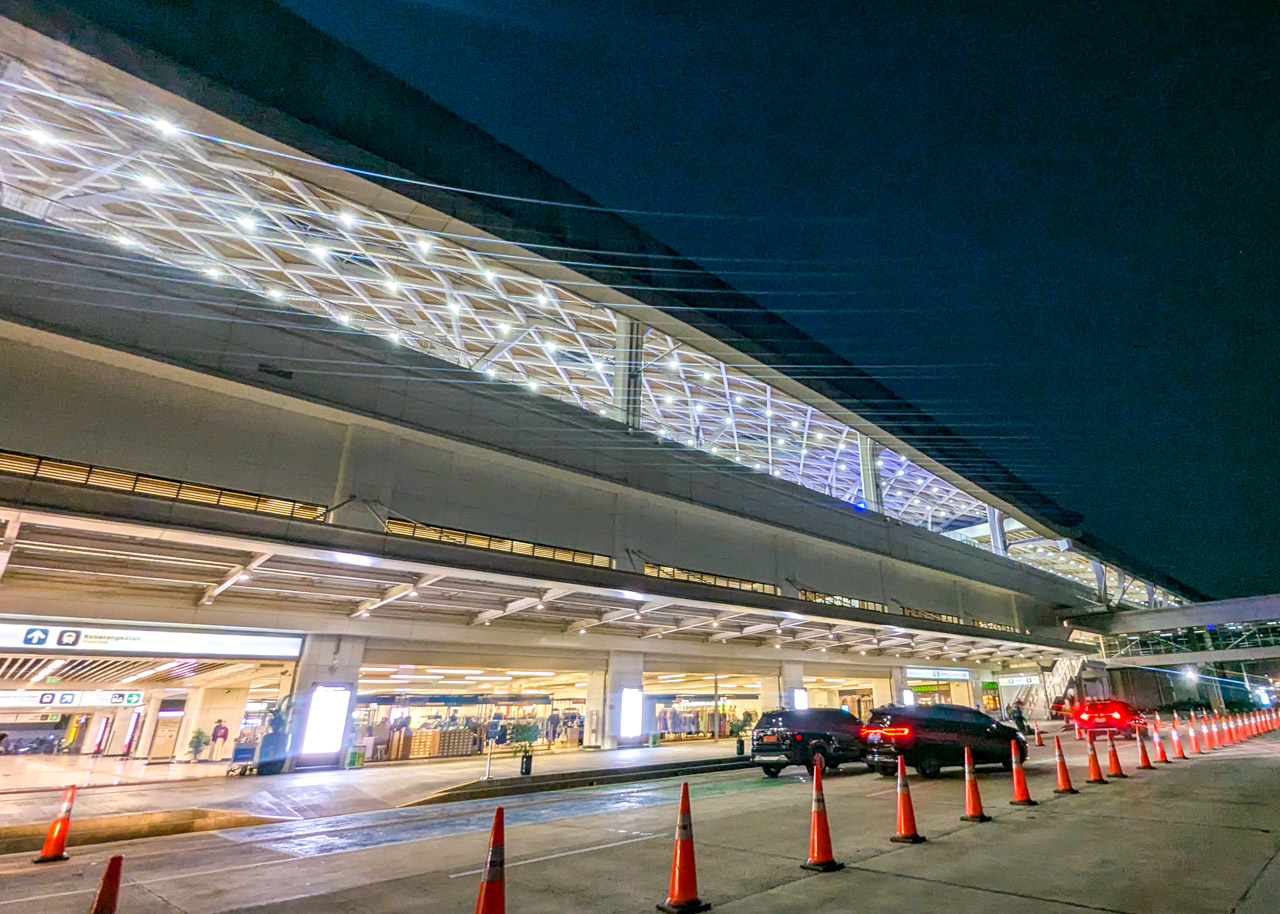
Unlike at Bandung, there isn’t a feeder train to take you to Jakarta’s city centre railway stations, so your choice is public transport or taxi. Many travellers enjoy the convenience of a Grab taxi, and these can be booked via the app. Meeting points are well-signposted and easy to find (there’s also a Grab office in the station where staff can assist with booking and finding your driver).
Useful reads before you go:
Top tips for Southeast Asia train travel
Reasons why you should travel by train around Southeast Asia
The BEST train journeys in Southeast Asia
10 essentials experienced travellers always take on trains in Southeast Asia
Book your train travel:
If you have found this website useful for planning your Southeast Asia train travel, you can show your support by buying me a coffee. Thanks so much!
