

Yogyakarta and Malang are home to some of Indonesia’s most visited sights including the soaring volcanic landscapes surrounding Mount Bromo and Mount Merapi, and the ancient temple complexes of Borobudur and Prambanan. During peak tourist season, the railways carry thousands of visitors between the two cities, through some of the most dramatic scenery in Southeast Asia.
Disclaimer: This website contains affiliate links. Should you click to purchase, it is at no additional cost to you, but we receive a small commission.
Have questions? Join the Southeast Asia Trains Facebook Group.
Route map and details
After leaving Indonesia’s cultural capital of Yogyakarta, the train crosses Central Java through a flat landscape punctuated by rice fields, small villages and distant views of volcanoes and mountain ranges. Around three hours into the journey the train reaches a major railway junction at Kertosono, where the mainline splits towards either Malang or Surabaya.
From the junction, the route continues south towards Tulungagung, before heading deeper into East Java and gradually climbing over 300m, eventually reaching the relaxed city of Malang, known as the gateway to Mount Bromo.
Timetables
Click here to check all Indonesia train times
There are five trains per day from Yogyakarta to Malang:
Average journey time: 6 hours
How to buy tickets
Click here to book train tickets from Yogyakarta to Malang.
The easiest way to buy train tickets in Indonesia is online rather than going to the station. You do pay a very small commission but the ease and convenience makes it worthwhile.
12Go is the best website to use and accepts international credit cards. It's also a good place to check timetables and prices.
After booking online you'll receive a confirmation email with a QR code and booking number. You'll need to exchange this for an orange boarding pass via one of the self-service machines at the station before travel. This can be done up to seven days in advance at any station in the country (it doesn't need to be the one you're departing from). You may also need to show your passport or ID at the boarding gate, but this isn't usually enforced.

How much does it cost?
Several types of train operate on the route from Yogyakarta to Malang, including the Gajayana train.
On the Gajayana trains from Yogyakarta, the most expensive seats are in the Luxury carriages, costing from IDR600,000 (US$35). As you drop down the various classes on this and other trains (Executive, Economy), tickets can be bought for as little as IDR260,000 (US$15).
What to expect on board
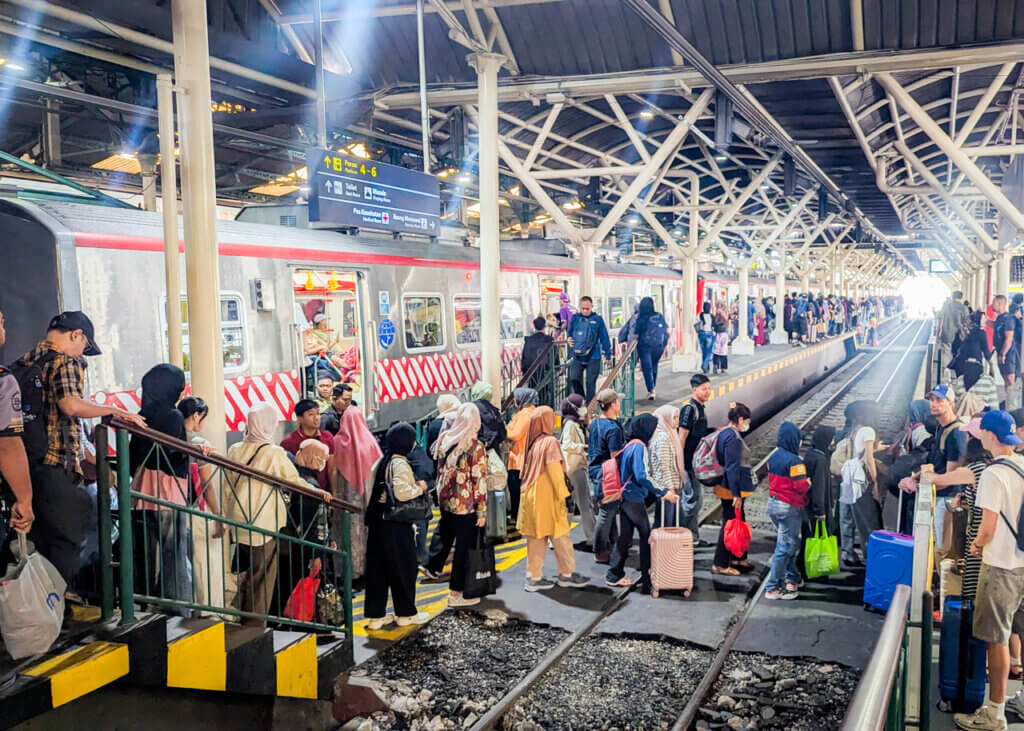
Executive and Economy class is how most passengers travel between Yogyakarta to Malang. They both offer a reasonable compromise between comfort and affordability. If you’re travelling during the peak tourist seasons, the overwhelming majority of your fellow passengers waiting on the platform at Yogyakarta station will be European holidaymakers. It feels safe and familiar, although if you’d prefer something with a more local feel, consider choosing Economy class for this route.
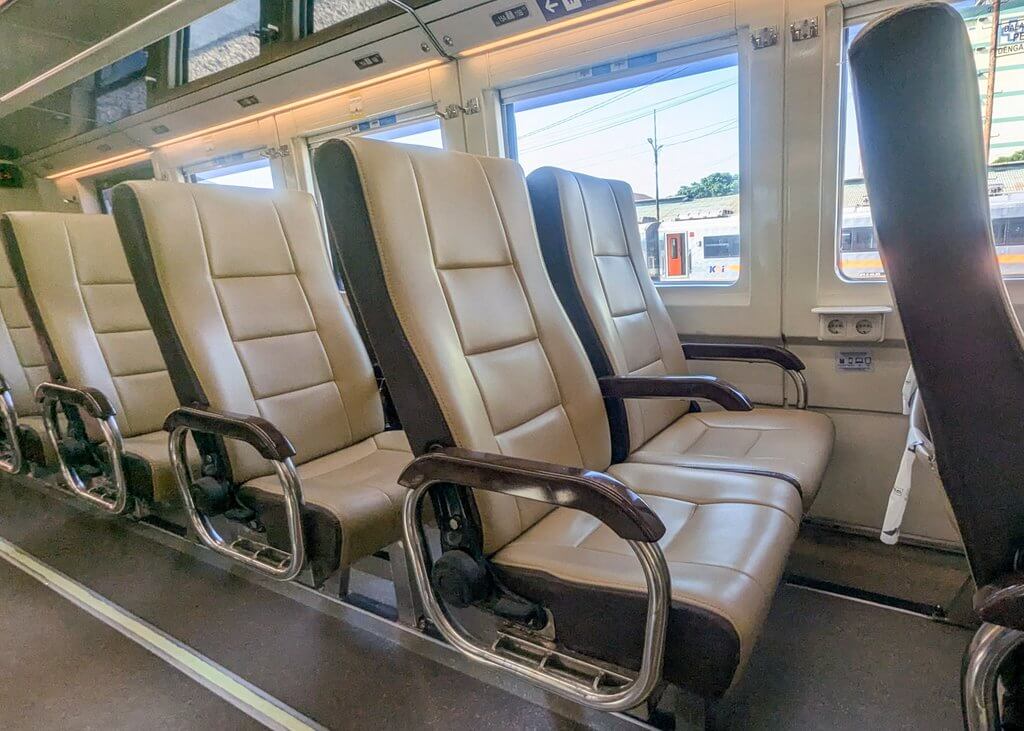
Executive is the most popular choice for a reason, largely thanks to its extra legroom and more comfortable seats. On a six hour journey like this one, you’ll be grateful for the extra comfort by the time you reach Malang. You’re also guaranteed a forward-facing seat in Executive, unlike in Economy where half the seats face backwards. However, don’t be put off from booking Economy class, especially if it’s all that’s available for your preferred journey dates. By most standards, it’s still a comfortable and safe ride, although people over 6ft tall might feel somewhat cramped.
Executive class seats can be rotated to face the direction of travel and enjoy a generous amount of legroom, allowing even the tallest passengers to stretch out and enjoy the ride. There’s also no guilt associated with reclining the seats, safe in the knowledge that the people behind you won’t be affected. Combined with large windows, footrests, headrests and padded seats, it all adds up to a relaxing and comfortable journey.
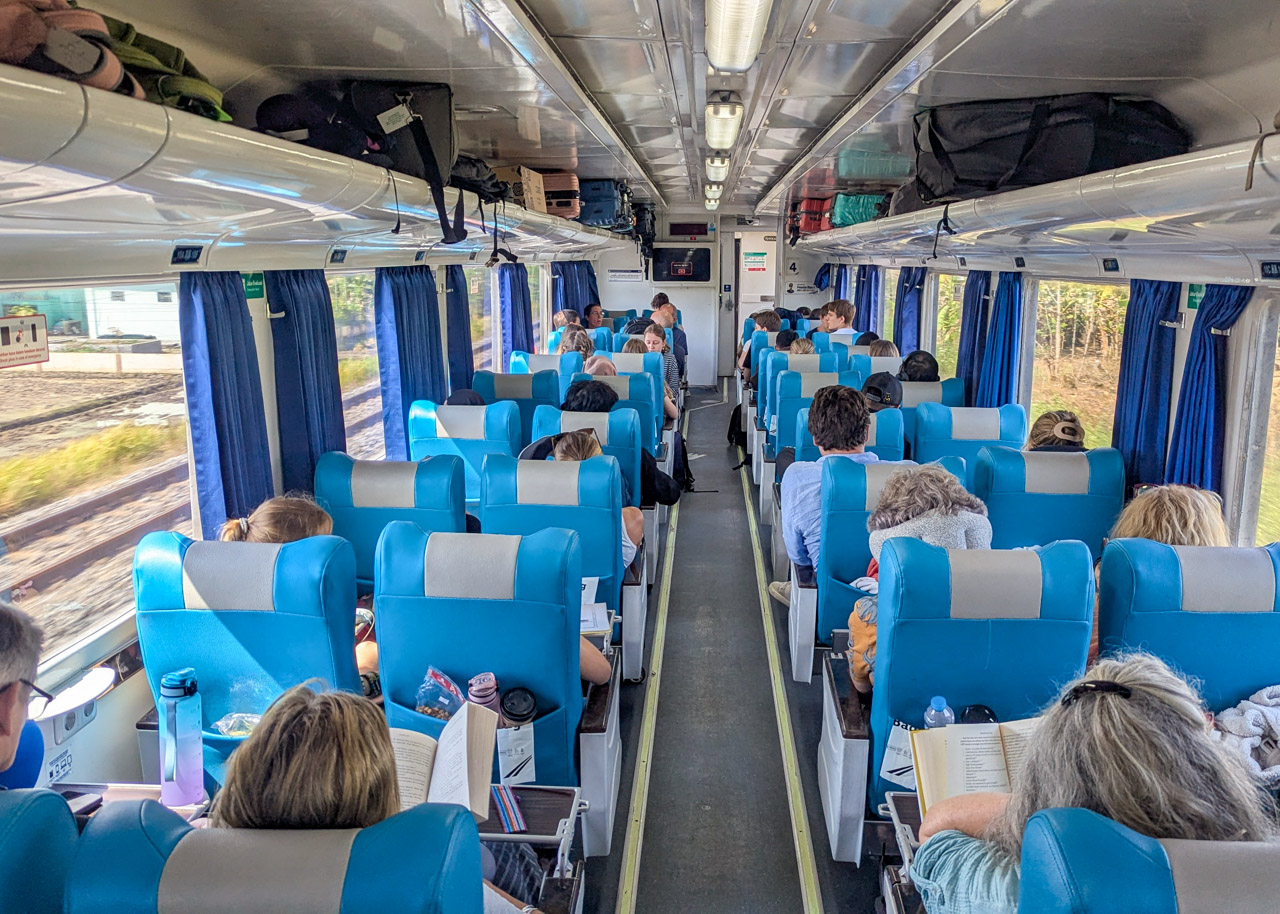
Economy class is also busy with overseas travellers but is more favoured by domestic passengers. Even though some carriages have been rebranded as ‘Premium Economy’, the experience definitely feels slightly less special than in Executive. The carriages feel noticeably more crowded, mainly due to the extra rows of seats that have been squeezed in, which greatly reduce available legroom and restricts how far the seats can be reclined. Unlike in Executive, Economy seats cannot be rotated, so half of the carriage will be travelling backwards for the entire journey. On our trip, rows 1-10 were forward-facing, but this can vary depending on the configuration of the train and other operational reasons.
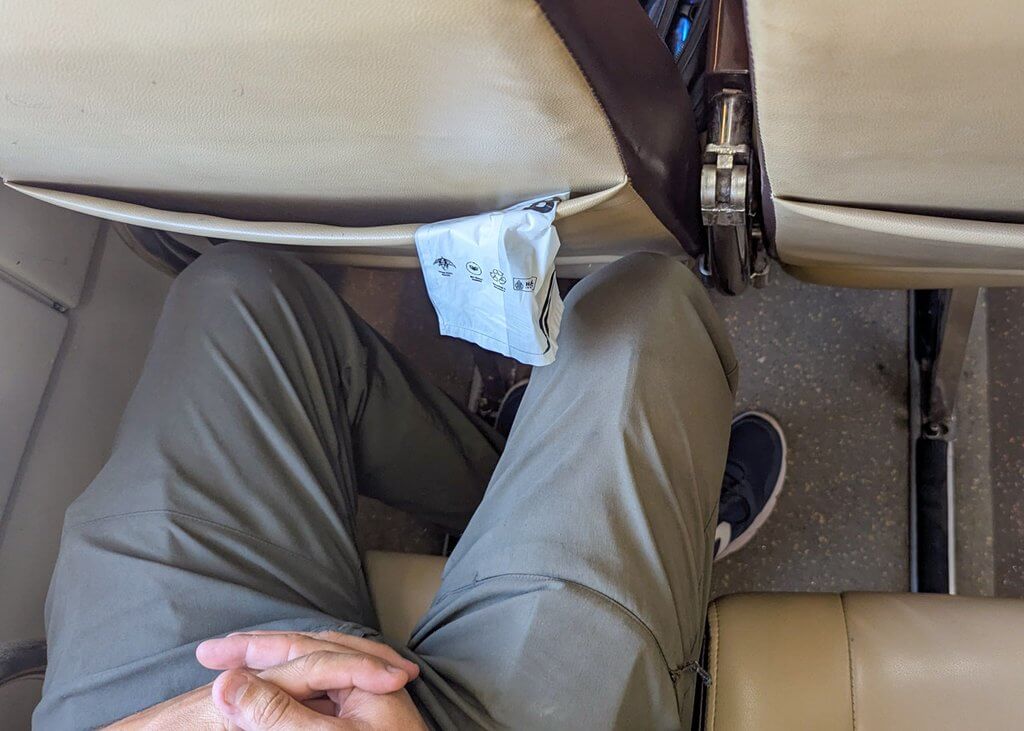
If you have a choice of seats, keep in mind that rows 10 and 11 are the centre of the carriage where the rows change direction, so these pairs of seats face each other. They’re a popular choice if you’re travelling as a group and want to make conversation, but not so much if the people opposite you are strangers. Legroom is almost non-existent and you’ll spend six hours staring directly at each other.
Both Economy and Executive carriages are fully air-conditioned and have power points, armrests and tray tables. Typically the trains will be made up of four Executive carriages and four Premium Economy. There’s also a catering car, more on that below.
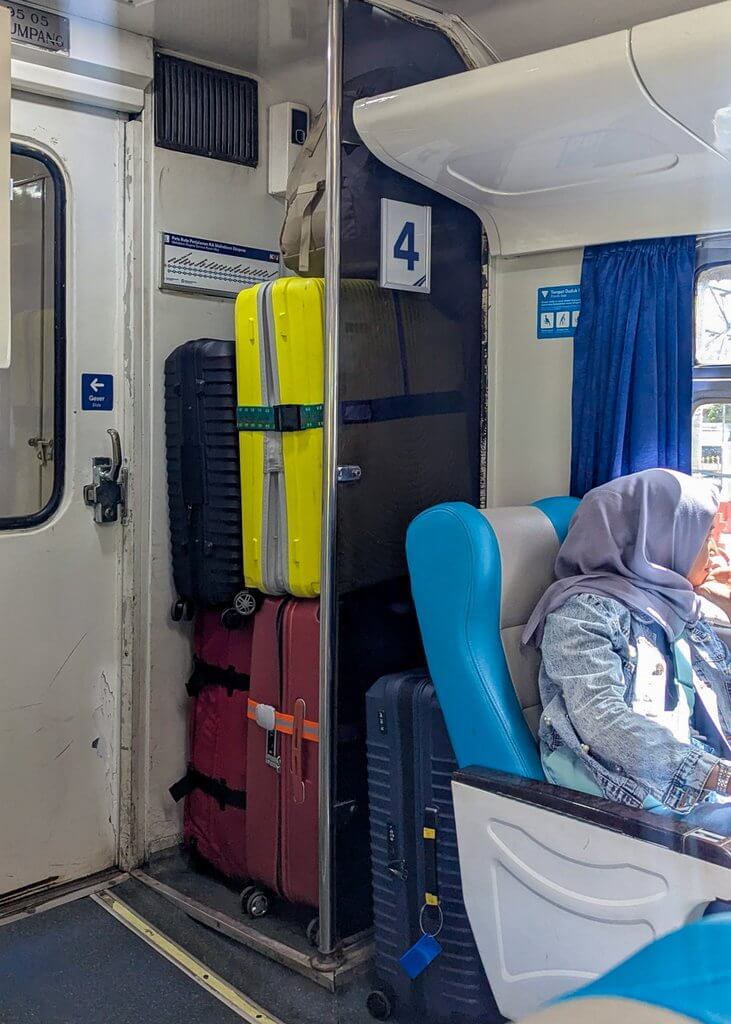
Luggage storage is the same in both classes but life will be significantly easier if you’re travelling with backpacks or smaller, soft suitcases. Many tourists board the train with huge rigid suitcases that don’t fit into the overhead racks, so there’s sometimes a battle to squeeze these cases into the luggage racks at the end of the carriage. It delays boarding and blocks the aisles, so do try and reduce your luggage size if at all possible. Technically, each passenger is allowed 20kg, and this is often enforced if you’re obviously exceeding the limits.
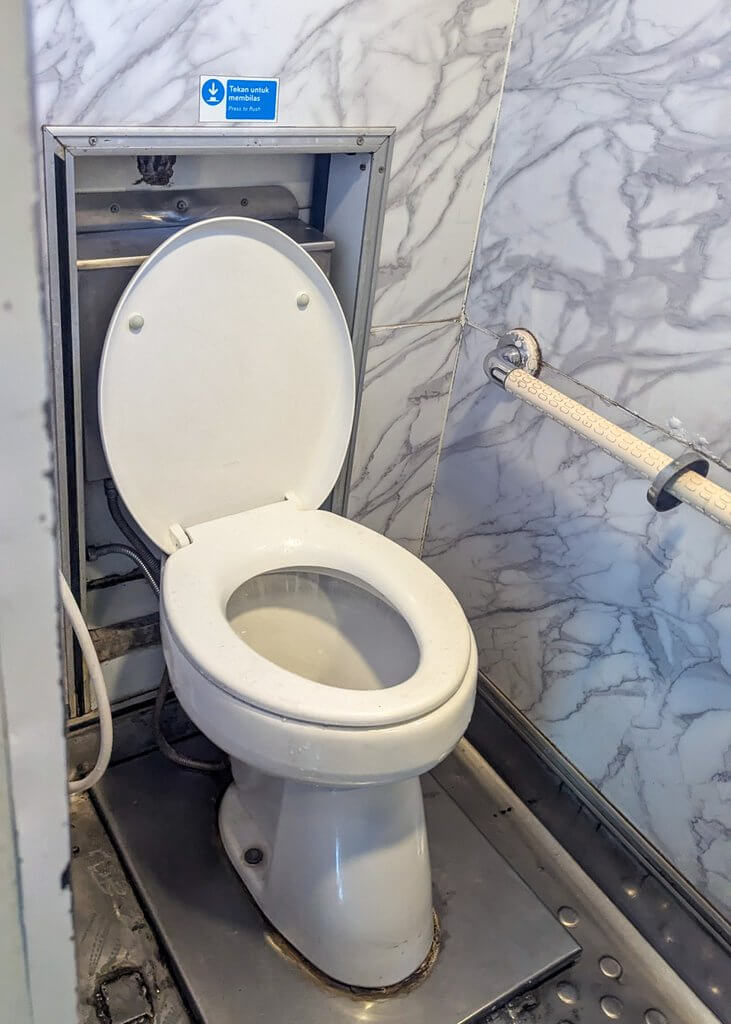
Toilets are located at the end of each carriage, with either Western-style or ‘squat-and-drop’, depending on the train and class you’re travelling in. Economy tends to have both types, Executive is usually Western-style only, and has separate male and female toilets. If they notice you patiently queueing for your gender’s toilet and the other one is available, train guards often suggest you just use the other toilet rather than waiting. Both classes’ toilets are cleaned regularly and kept in decent condition.
Catering options
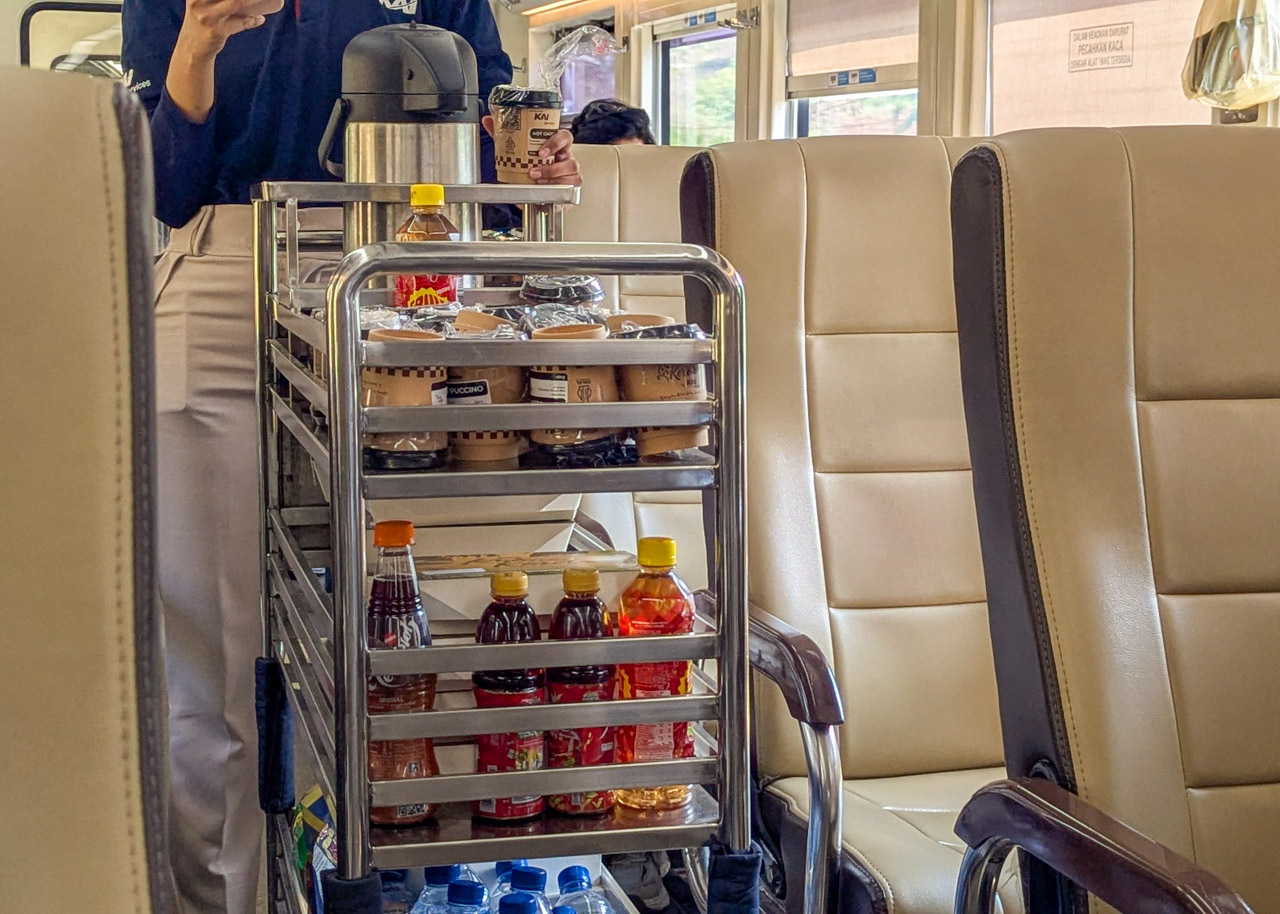
A catering trolley is pushed down the aisle every thirty minutes or so, selling hot meals (noodles, rice, etc), snacks, instant noodles, coffee and soft drinks. Payment is by cash or e-wallets (QRIS).
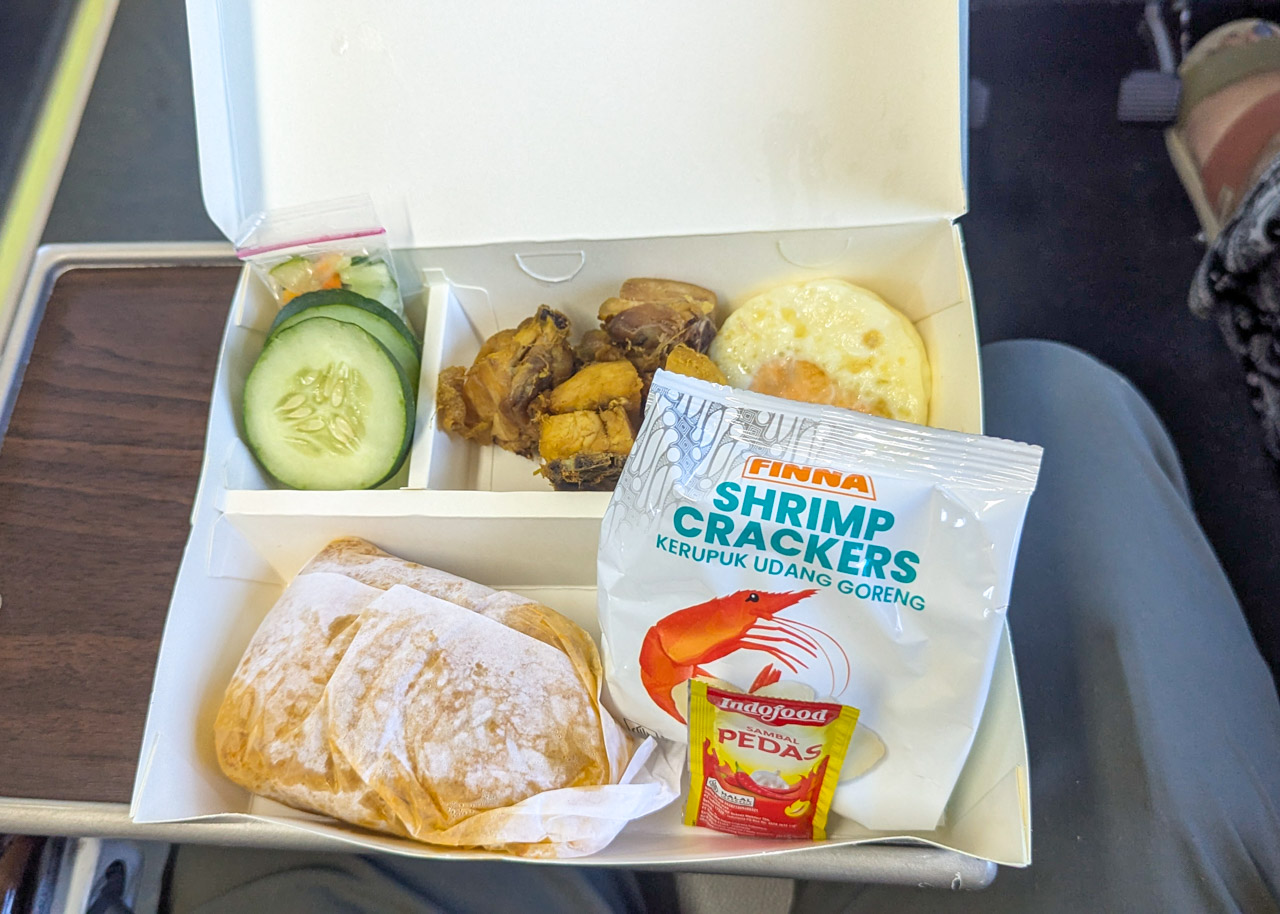
It’s much more pleasant to retreat to the restaurant car where you’ll proper chairs and tables in a sociable space. Food and drink options are largely the same as what’s available on the trolley, but they’re easier to consume if you’re sat at one of the tables. As the train approaches Malang, the stock levels drop significantly and you’re usually left with little choice in the final hour or two.
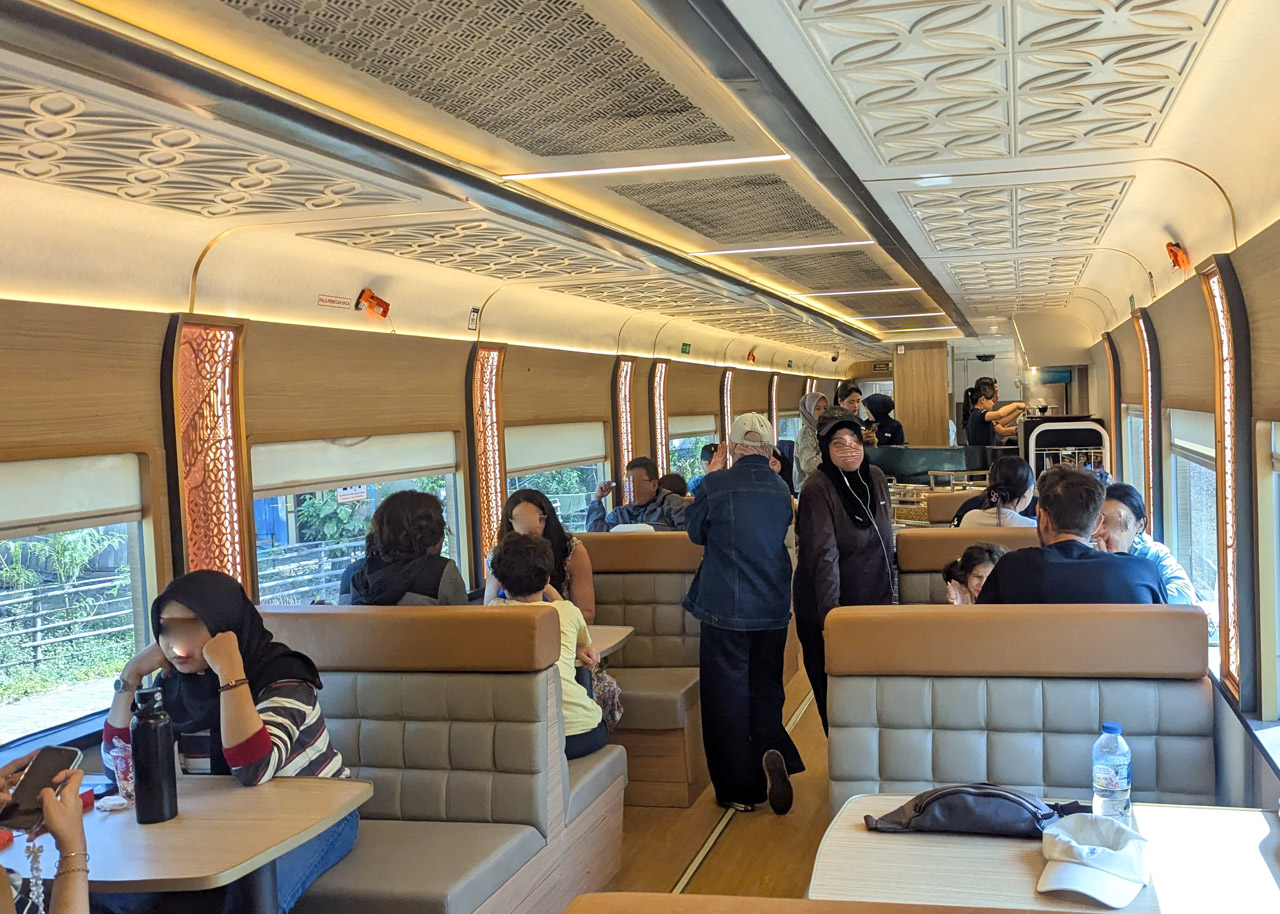
Vendors aren’t allowed to board the train at or in-between stops which is a shame as it’s one of the joys of other Southeast Asian train rides.
Journey description
Running through some of the most dramatic scenery in the country, this is a journey that lives long in the memory of many visitors to Indonesia. The first 300km of the route are relatively flat, passing through the fertile agricultural valleys between Central and East Java, with majestic volcanoes and mountains poking through the clouds in the far distance. Every time you glance back up from your book to the landscape, there’ll be something new on the horizon to take your breath away.
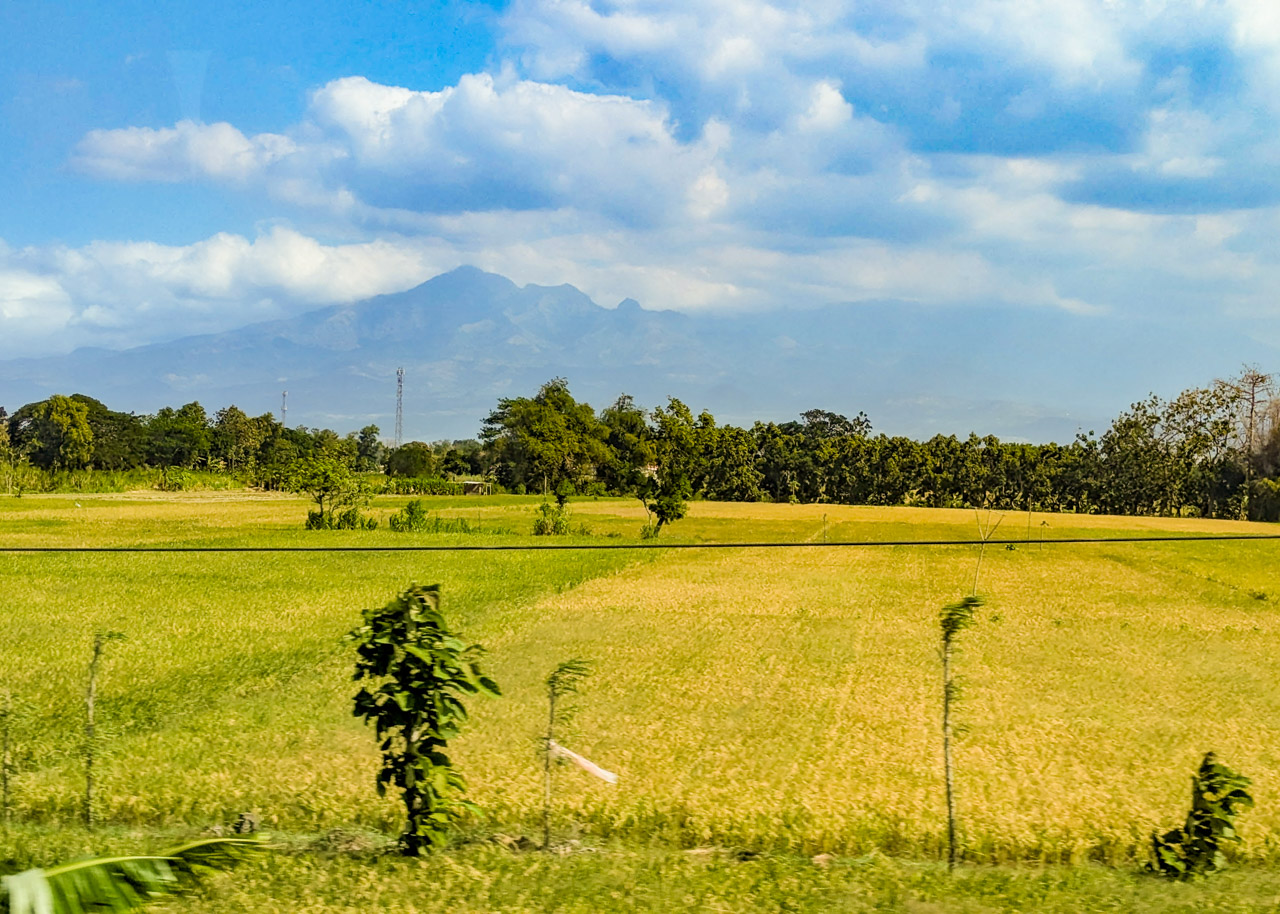
At the east Javan town of Tulungagung, the train turns east and starts the climb to 400m above sea level and the city of Malang, a place where the climate is noticeably cooler than Yogyakarta. Many travellers reach into their backpacks for long-forgotten jumpers as they step off the train.
Malang’s station is well-located in the centre of town and it’s also easy enough to arrange a Grab or Gojek taxi outside the station building.

Useful reads before you go:
Top tips for Southeast Asia train travel
Reasons why you should travel by train around Southeast Asia
The BEST train journeys in Southeast Asia
10 essentials experienced travellers always take on trains in Southeast Asia
Book your train travel:
If you have found this website useful for planning your Southeast Asia train travel, you can show your support by buying me a coffee. Thanks so much!
