
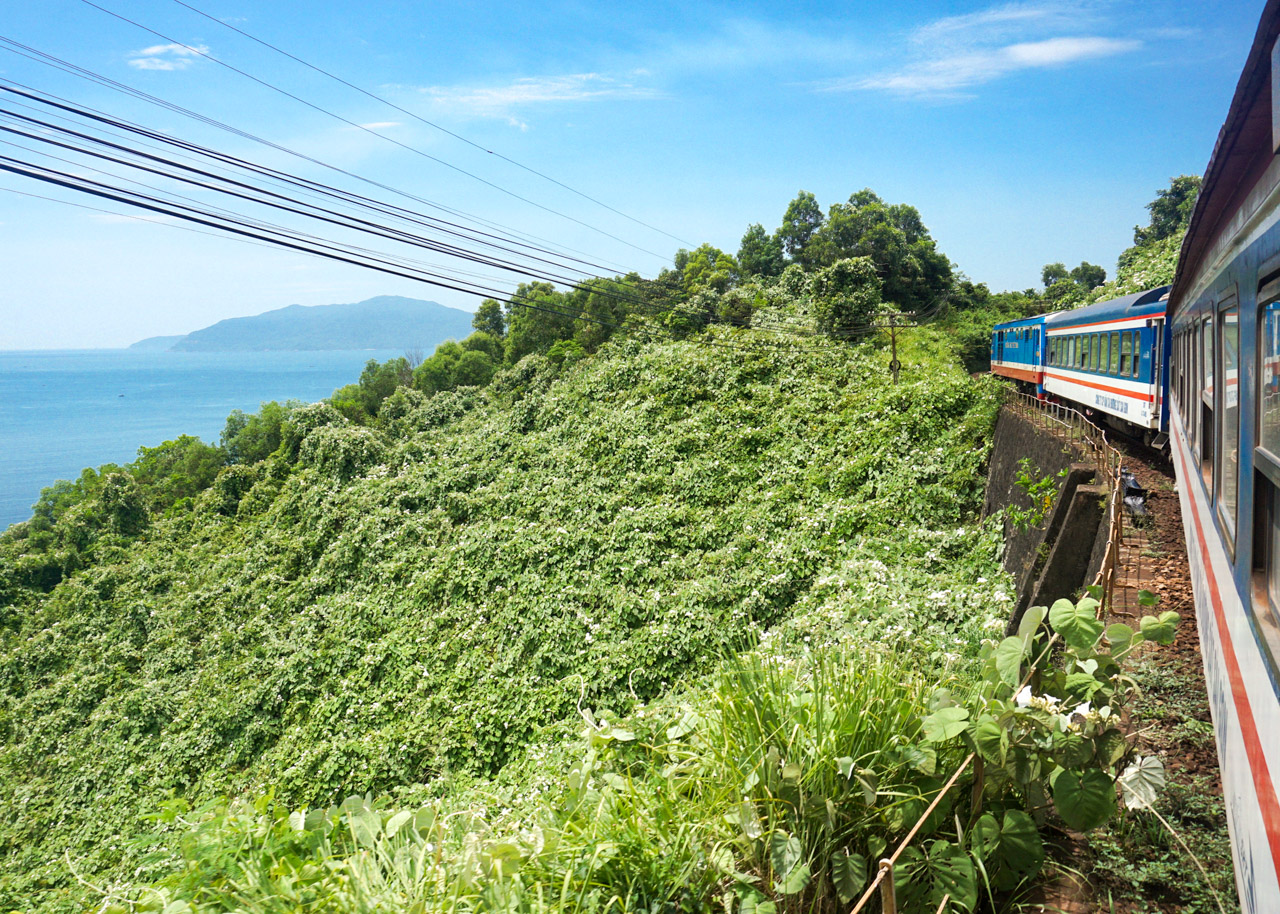
Danang to Hue is one of the most attractive and photographed train journeys in the world, consistently popular with tourists who want to witness the majestic Hai Van Pass and surrounding scenery. In our opinion, it’s the prettiest section of the entire North-South railway line, so this is one journey you’ll want to experience during your time in Vietnam, whether it’s a three-hour hop between the two stations or as part of a longer multi-day journey.
If your schedule allows, take one of the daytime trains that offer the best views and most convenient arrival times into Hue. The coastal city of Danang is hugely popular with overseas visitors and expats, with many using the city as a long-term base thanks to its international schools, cultural scene, international airport and proximity to Hoi An.
If you’re planning to travel further around Vietnam by train, our Vietnam train travel guide covers the country’s main railway routes, buying tickets, train classes and what to expect on board.
Disclaimer: This website contains affiliate links. Should you click to purchase, it is at no additional cost to you, but we receive a small commission.
Have questions? Join the Southeast Asia Trains Facebook Group.
Route map
Timetables
Click here to check all Vietnam train times
There are six trains per day, but avoid the first and last services if you want to experience the incredible views that make this journey so famous
| Train | Da Nang | Hue |
|---|---|---|
| SE6 | 02:01 | 04:44 |
| SE10 | 08:59 | 12:10 |
| SE4 | 12:28 | 15:05 |
| SE2 | 13:21 | 15:49 |
| SE12 | 16:29 | 19:01 |
| SE8 | 23:41 | 02:12 +1 |
Average journey time: 2 hours 40 minutes
How to buy tickets
Click here to book train tickets from Da Nang to Hue.
The easiest way to buy train tickets in Vietnam is online rather than going to the station. You do pay a very small commission but the ease and convenience makes it worthwhile.
Baolau is the best site to use for buying train tickets, they have access to the live Vietnam Railways booking engine, so you can easily see availability, timetables and prices.
Payment can be made using international credit card and PDF confirmation tickets are sent to your email address within a few minutes. This is the actual ticket you need to board the train, so there's no need to exchange it at the station before travel. You may prefer to print the pdf out, but it's also fine to show it on your mobile phone to the conductors and station staff.
How much does it cost?
Trains on the route from Danang to Hue typically have three classes available: four-berth sleeper, six-berth sleeper and normal seats. For a short daytime journey like this, many travellers choose the normal seats and spend the whole time gazing out of the window.
A heritage train also runs on this route and may appear in some online timetables. These trains are aimed entirely at tourists and only operate between Danang and Hue (and vice versa).
Ticket prices are from:
| Class | Cost (VND) |
|---|---|
| Soft seat | 100,000 |
| Sleeper 4-berth | 165,000 |
| Sleeper 6-berth | 150,000 |
| Heritage train | 260,000 |

What to expect on board
Vietnamese trains are generally comfortable, reliable and in good condition. The rolling stock is perhaps showing its age in places, although there are plans for refurbishments and upgrades. On board, the compartments are kept clean and there’s plenty of space to store your luggage, especially if you’re just travelling with backpacks.
Four and six-berth sleepers aren’t only for overnight trips, they’re also a good option for shorter daytime services like the ones from Danang to Hue. There’s plenty of space to spread out, although the views out of the window can be restricted for those sat further away.
We’d recommend travelling in the normal carriages for this trip as the larger windows and upright seats work better on such a short trip when you (probably) won’t be falling asleep. As the train passes through the Hai Van pass, you’ll be grateful for the more open-plan setup of the carriage.

Journey description
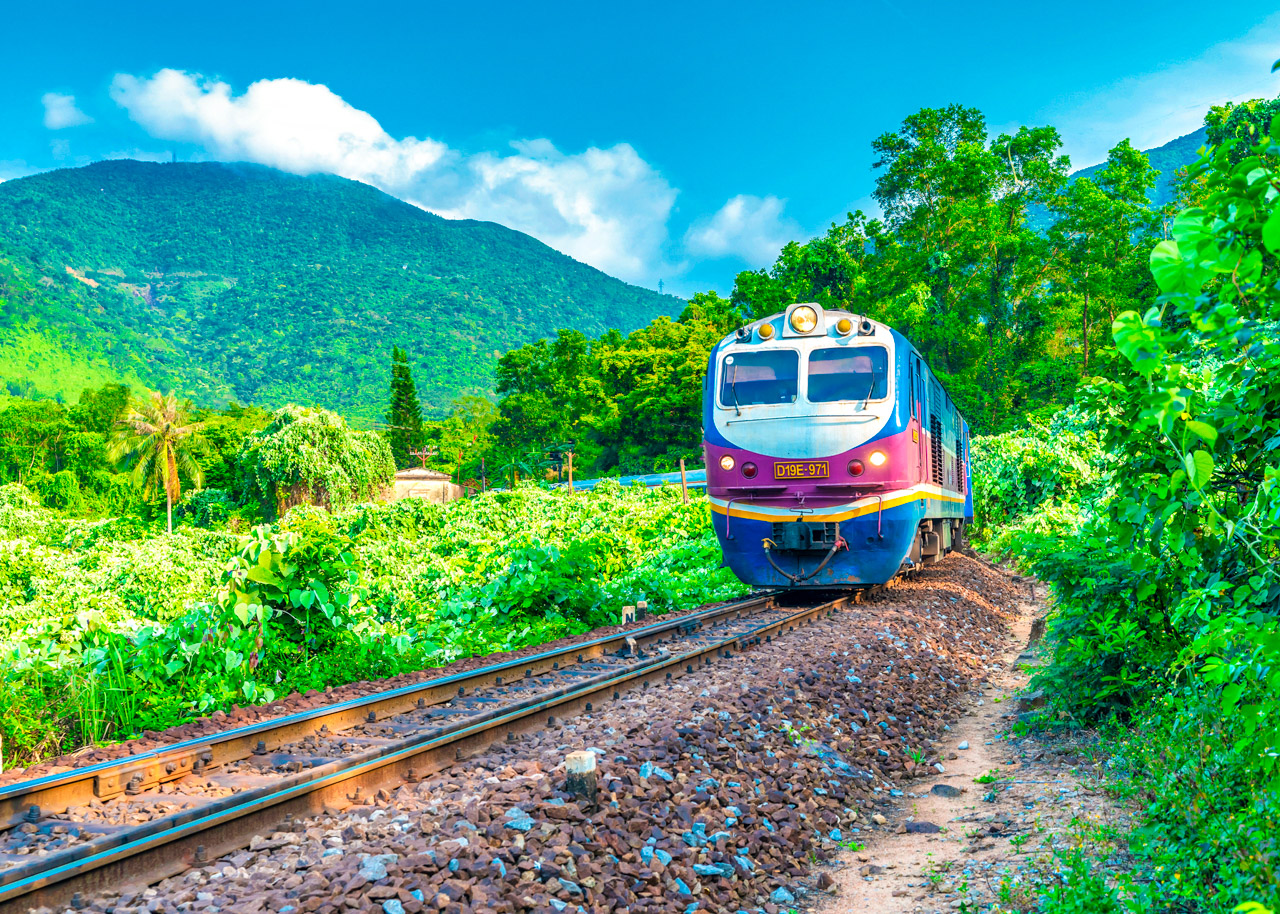
Danang railway station is one of the largest on the network and is a popular starting point for Vietnamese train adventures, with many tourists flying into its international airport. After leaving the city centre and passing alongside Danang Bay, the train begins the arduous 150m climb through the world-famous Hai Van Pass, home to one of the most dramatic and talked-about sections of railway in the world. It also features on our list of best train rides in Southeast Asia.
Dropping down from the mountains, the train passes secluded coves and beaches, all the while offering beautiful ocean views. After leaving the coast, the train completes its journey at Hue railway station, close to the Perfume River and the Unesco-listed Imperial City.
Useful reads before you go:
Top tips for Southeast Asia train travel
Reasons why you should travel by train around Southeast Asia
The BEST train journeys in Southeast Asia
10 essentials experienced travellers always take on trains in Southeast Asia
Book your train travel:
If you have found this website useful for planning your Southeast Asia train travel, you can show your support by buying me a coffee. Thanks so much!
