
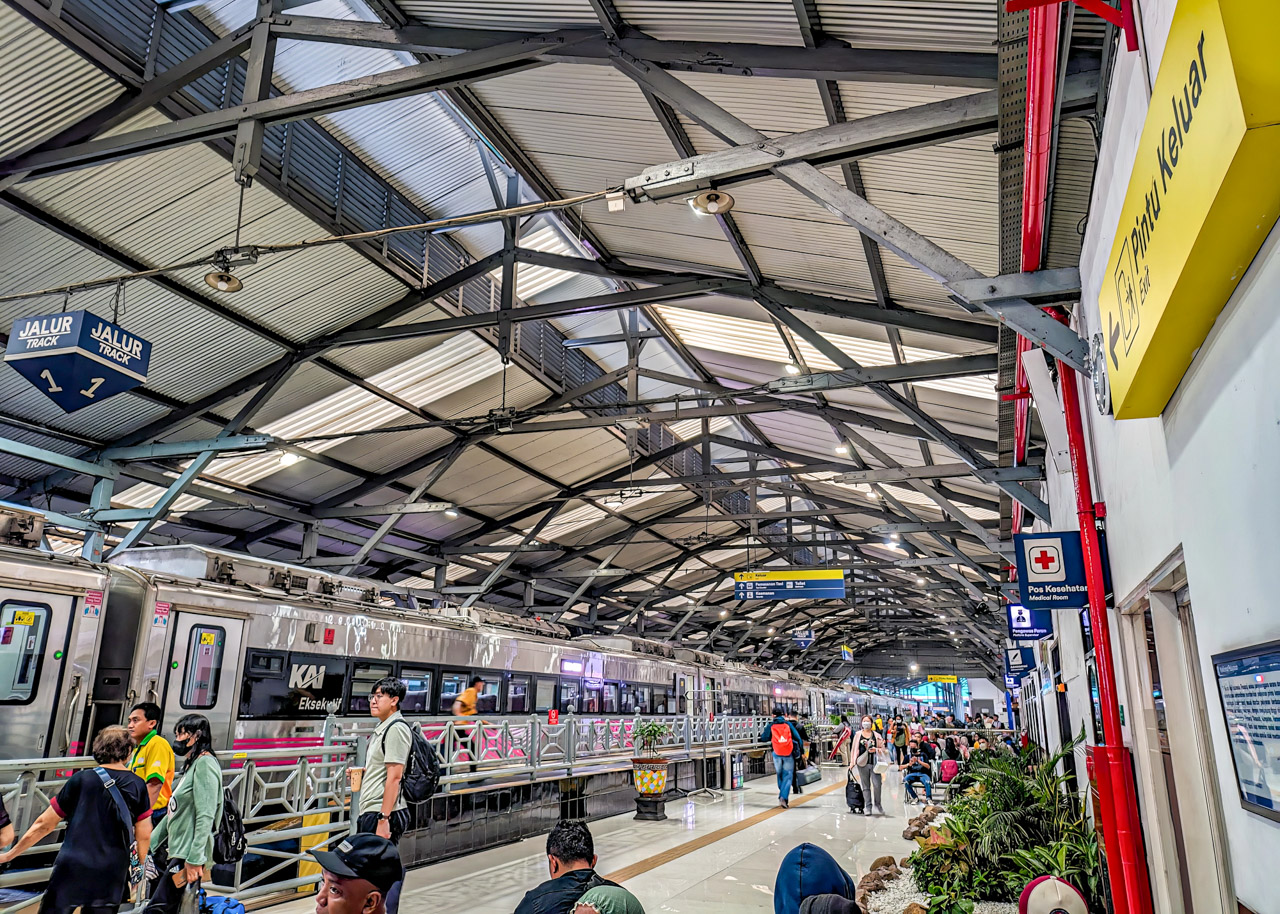
Surabaya is the second-largest city in the country and one of the main entry points for tourists into Indonesia. It’s connected to the cultural capital of Yogyakarta by several daily trains, allowing tourists to travel efficiently and in comfort between the two cities.
Once in Yogyakarta, most people explore the city before visiting the major attractions of Mt Bromo, Borobudur and Prambanan. As these are the busiest tourist sites in the country, trains can get booked up weeks in advance during the peak season, so it pays to plan ahead.
Disclaimer: This website contains affiliate links. Should you click to purchase, it is at no additional cost to you, but we receive a small commission.
Have questions? Join the Southeast Asia Trains Facebook Group.
Route map and details
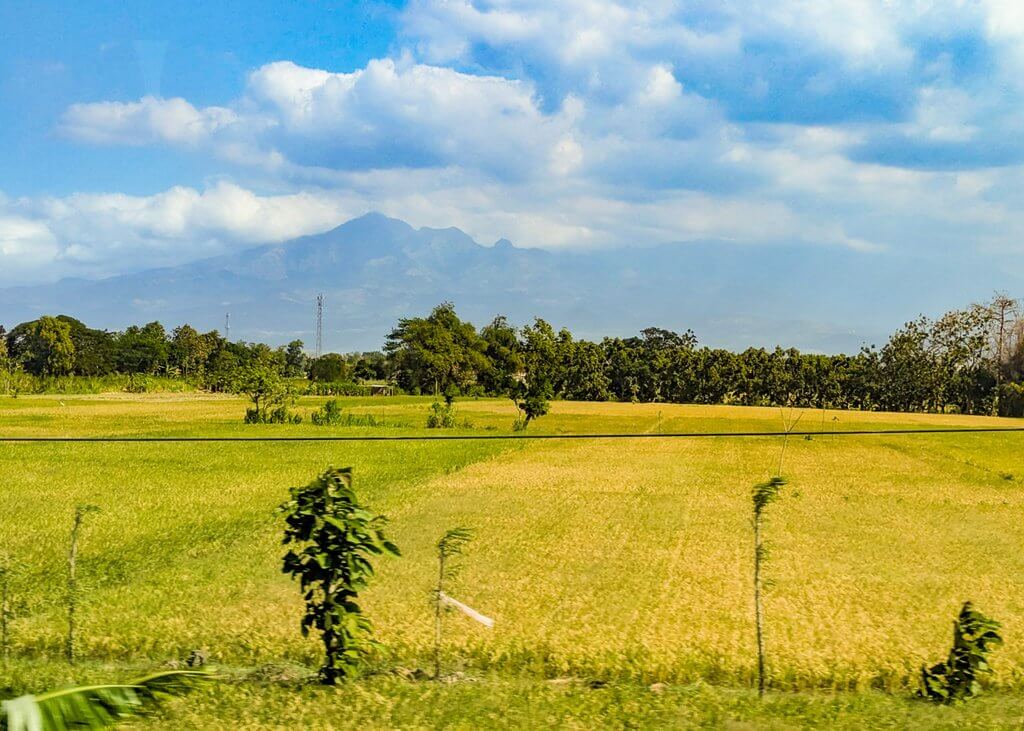
Trains heading south and east from Surabaya depart from Gubeng station, right in the heart of the city. Taking around four hours to complete the journey, the trains roll through the rice fields of eastern and central Java, calling at the towns of Mojokerto, Madiun and Surakarta (Solo) before arriving in the country’s cultural centre of Yogyakarta.
It’s a peaceful and enjoyable journey, much more relaxing than travelling on the roads.
Timetables
Click here to check all Indonesia train times
There are eleven trains per day from Surabaya to Yogyakarta:
Average journey time: 4 hours
How to buy tickets
Click here to book Indonesian train tickets.
The easiest way to buy train tickets in Indonesia is online rather than going to the station. You do pay a very small commission but the ease and convenience makes it worthwhile.
12Go is the best website to use and accepts international credit cards. It’s also a good place to check timetables and prices.
After booking online you’ll receive a confirmation email with a QR code and booking number. You’ll need to exchange this for an orange boarding pass via one of the self-service machines at the station before travel. This can be done up to seven days in advance at any station in the country (it doesn’t need to be the one you’re departing from). You may also need to show your passport or ID at the boarding gate, but this isn’t usually enforced.
How to buy tickets
Click here to book train tickets from Surabaya to Yogyakarta.
The easiest way to buy train tickets in Indonesia is online rather than going to the station. You do pay a very small commission but the ease and convenience makes it worthwhile.
12Go is the best website to use and accepts international credit cards. It's also a good place to check timetables and prices.
After booking online you'll receive a confirmation email with a QR code and booking number. You'll need to exchange this for an orange boarding pass via one of the self-service machines at the station before travel. This can be done up to seven days in advance at any station in the country (it doesn't need to be the one you're departing from). You may also need to show your passport or ID at the boarding gate, but this isn't usually enforced.
How much does it cost?
Several different types of class are available on Indonesian trains, with the two most common being Executive and Economy. All of the trains from Surabaya to Yogyakarta offer these two classes, with most tourists choosing Executive class.
Prices for Economy class start around IDR180,000 (US$10) depending on the speed of the train. Executive tickets cost from IDR280,000 (US$15).
What to expect on board
The two most popular classes for travel between Surabaya and Yogyakarta are Executive or Economy class, both of which offer good value and comfort. During the peak tourist seasons (notably in July and August), this route is heavily used by overseas travellers and you’re much more likely to find yourself surrounded by Europeans than Indonesians, particularly in Executive. It feels familiar and relaxing but if you’d prefer more of a local feel, consider booking into the Economy carriages.
Executive class generally sells out before Economy as it offers more comfortable seats and significantly more legroom. For longer journeys like this one that take over six hours, the extra comfort is important, and you’ll arrive in Yogyakarta feeling much more relaxed. It’s also a bonus knowing that all seats in Executive are forward-facing, unlike in Economy where half the seats face backwards. Don’t worry though if Economy is the only available option when you book your tickets, it’s still a comfortable and safe ride, certainly compared to many other train journeys in Southeast Asia. It just misses out on some of the extra touches and features that you’d get in Executive.
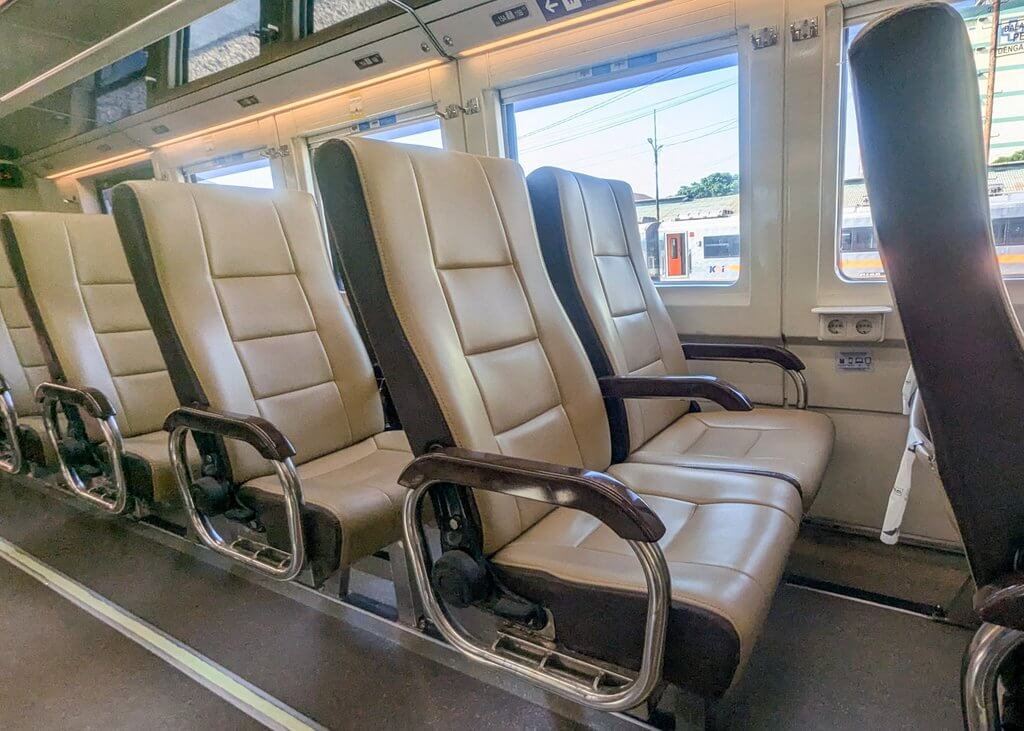
Executive class carriages are cleverly designed with rotatable seats, so you’ll be forward-facing (or you can spin one pair around to make a group of four if you’re travelling with friends or family). They also have plenty of legroom, more than enough for even the tallest traveller to lie back and relax, plus you won’t feel guilty about reclining your seat. Add in the large windows, footrests and padded seats, and there’s nothing to stop you from having a chilled-out trip to Yogyakarta.
Economy class is still a good product and many travellers choose this option to save some money as it can be considerably cheaper than Executive, especially if you’re travelling in a group. The two main areas where it falls short of Executive are legroom and upkeep of the carriages. Firstly, a few extra rows of seats have been squeezed into the carriage, leaving only a few inches of legroom. If you’re over 6ft tall, you might need to squeeze in and prepare for a tight ride, particularly if the person in front of you reclines their seat. Secondly, the carriages themselves are slightly less well-looked after than the Executive ones, so you miss out on some of the comfort and premium feel found elsewhere on the train.
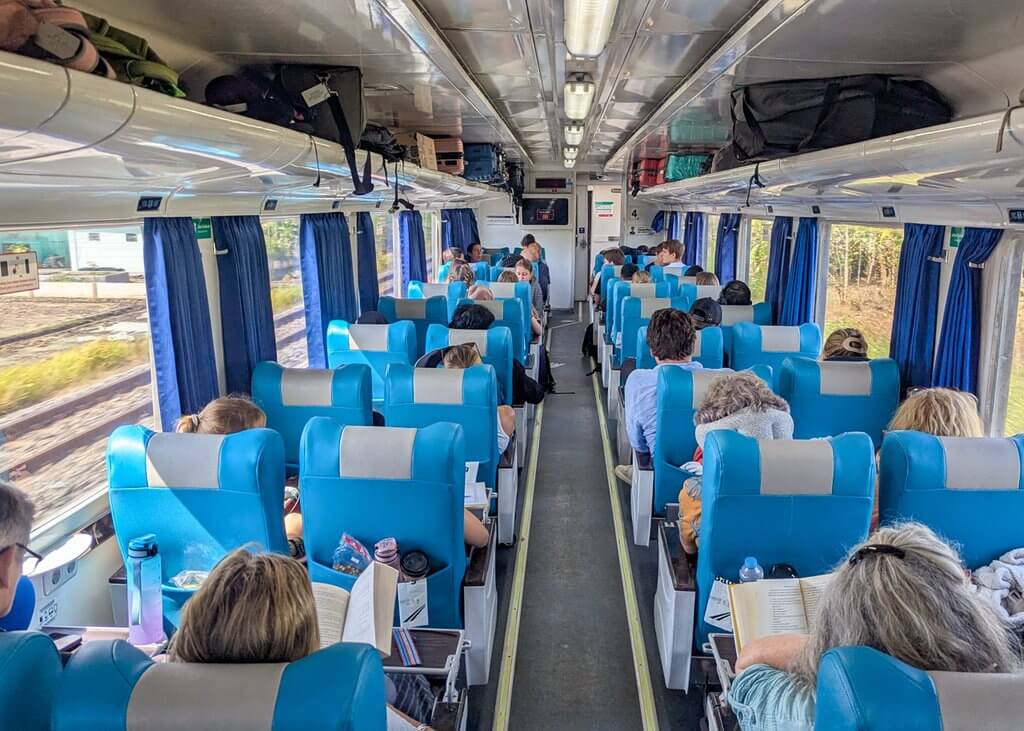
Finally, the seats are fixed in place and can’t be rotated, meaning half the carriage faces the direction of travel and half are travelling backwards. Depending on how much motion-sickness affects you, this could be a problem. On our trip, rows 1-10 were forward-facing, but this can vary depending on the configuration of the train and other operational reasons.
If you have a choice of seats, bear in mind that rows 10 and 11 are in the centre of the carriage where the rows change direction, so these pairs of seats face each other. They’re a popular choice if you’re travelling as a group and want to make conversation, but perhaps less so if the people opposite you are strangers. Legroom is almost non-existent and you’ll spend six hours staring directly at each other.
Both Economy and Executive carriages are fully air-conditioned and have power points, seat pockets, armrests and tray tables. Typically the trains will be made up of four Executive carriages and four (Premium) Economy. There’s also a catering car, more on that below.
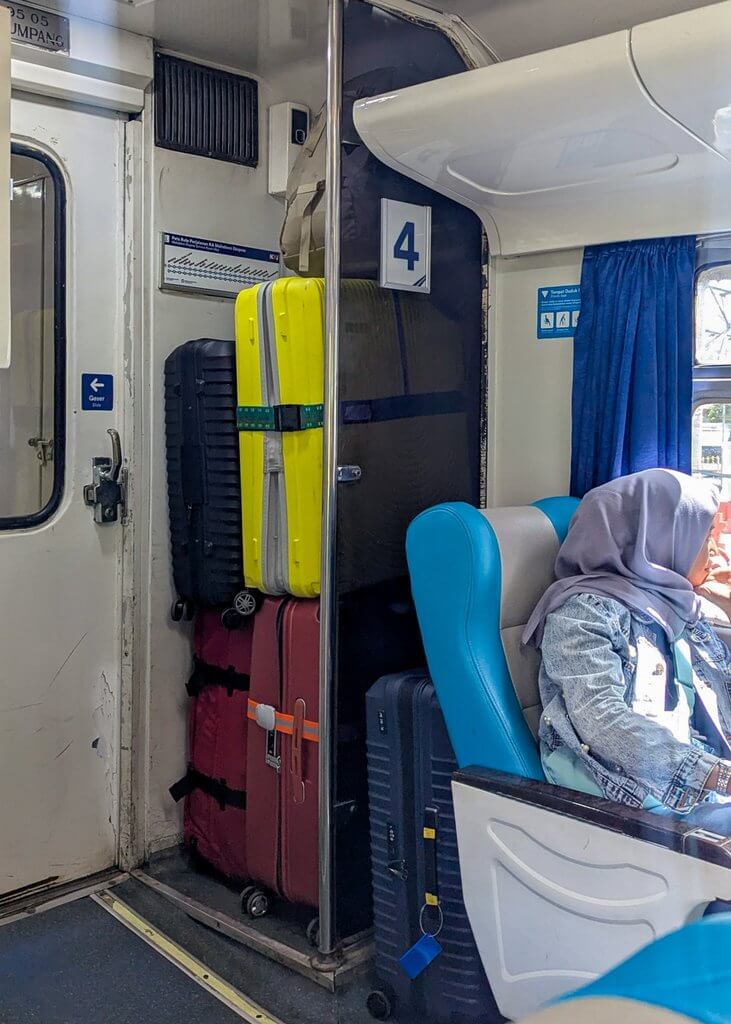
Luggage storage is the same in both classes but life will be significantly easier if you’re travelling with backpacks or smaller, soft suitcases. Many tourists board the train with huge rigid suitcases that don’t fit into the overhead racks, so there’s sometimes a battle to squeeze these cases into the luggage racks at the end of the carriage. It delays boarding and blocks the aisles, so do try and keep your luggage size down if at all possible. Technically, each passenger is allowed 20kg, and this is often enforced if you’re obviously exceeding the limits.
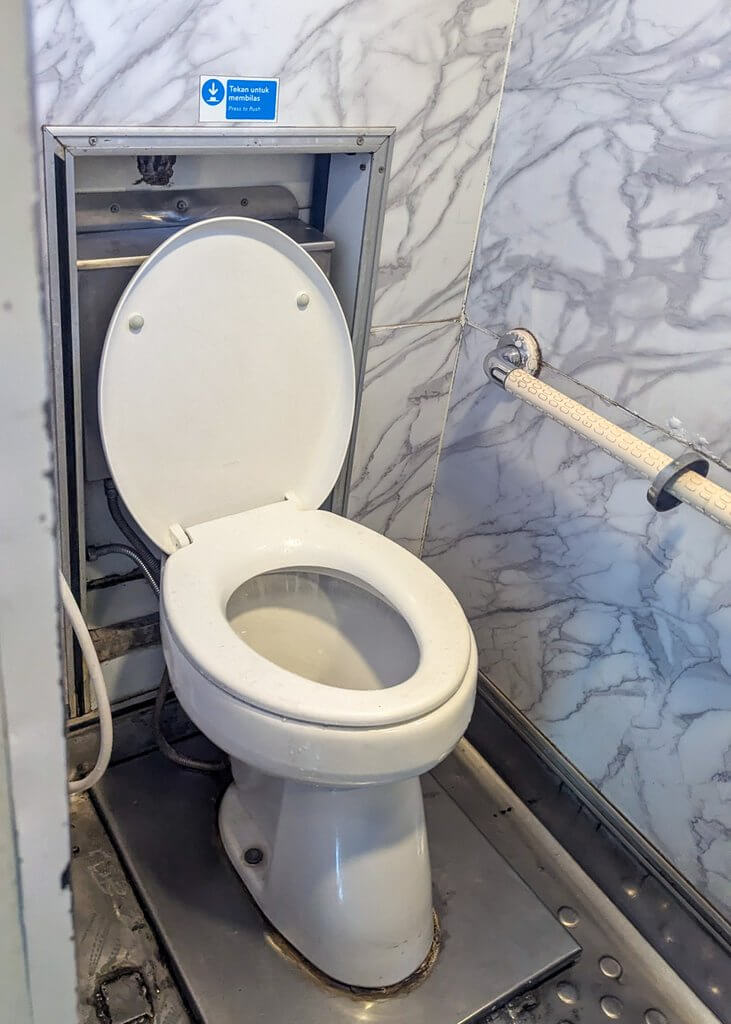
Toilets are located at the end of each carriage, with either Western-style or ‘squat-and-drop’, depending on the train and class you’re travelling in. Economy tends to have both types, while Executive is usually Western-style only and has separate male and female toilets. If they notice you patiently queueing for your gender’s toilet and the other one is available, train guards often suggest you just use the other toilet rather than waiting. The toilets in both classes are cleaned regularly and kept in decent condition.
Catering options
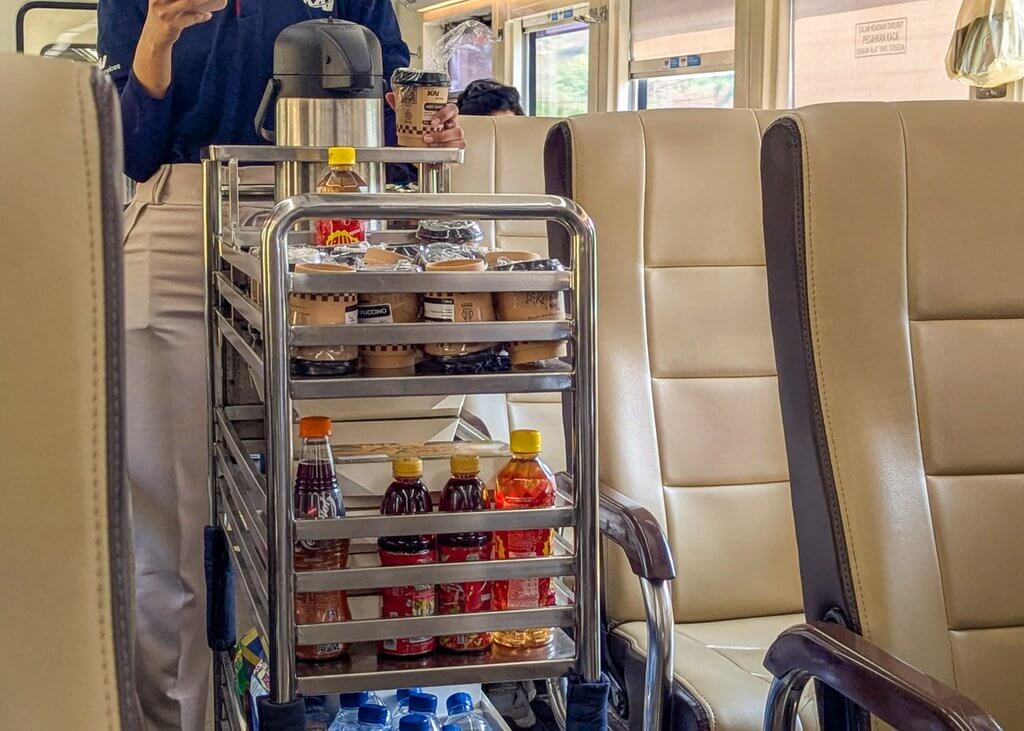
Onboard catering is available either at your seat or by heading to the restaurant car, with both offering the same food and drinks: hot meals (noodles, rice, etc), snacks, instant noodles, coffee and soft drinks. Although the catering trolley is convenient, most passengers prefer making the short walk to the restaurant car and eating at a proper table and chair.
Payment is either by cash or e-wallets (QRIS). When the train is busy, it’s common for stock levels to run low, particularly with the hot meals and soft drinks. During the last hour or so of the journey, you might find that only water and crisps are still available.
Useful reads before you go:
Top tips for Southeast Asia train travel
Reasons why you should travel by train around Southeast Asia
The BEST train journeys in Southeast Asia
10 essentials experienced travellers always take on trains in Southeast Asia
Book your train travel:
If you have found this website useful for planning your Southeast Asia train travel, you can show your support by buying me a coffee. Thanks so much!
